

Bulgaria travel guide: this Balkan country pairs Sofia’s church domes and museums with UNESCO-listed monasteries, Black Sea beach towns, and some of Europe’s best-value ski resorts in Bansko — all within a country roughly the size of Ohio.
With more than 30 years of experience in international destination management and the travel industry, this guide brings together practical planning help, carefully chosen recommendations, and an internationally grounded perspective — so you can plan your trip to Bulgaria with confidence and make the most of your time there.
Explore Bulgaria’s unforgettable experiences
• Discover tours and experiences across Bulgaria ↗ – cultural monuments, historic towns, and natural attractions nationwide.
• Experience Sofia on a guided walking tour ↗ – Alexander Nevsky Cathedral, Vitosha Boulevard, and centuries of Ottoman and Soviet-era history.
• Discover Plovdiv’s Old Town ↗ – Roman ruins, Thracian hilltop sites, and Bulgaria’s Revival-era architecture.
• Day trips across Bulgaria ↗ – Rila Monastery, Belogradchik, Veliko Tarnovo, and the Rose Valley beyond the capital.
Plan your trip to Bulgaria
Tours in Sofia & Plovdiv · Hotels nationwide
Map of Sofia Bulgaria 🇧🇬 with travel and destination photos
Weather today in Sofia
SOFIA WEATHERTravel insurance in minutes

We recommend this because we use it ourselves when traveling. 👉 Get your quote now — fast, secure, and trusted for every trip.
Best Time to Visit Bulgaria
May, June and September are the strongest months. Sofia and Plovdiv are comfortable for walking, the Black Sea coast is warm without the July–August crowds, and hiking routes in the Rila and Rhodope mountains are clear of snow. July and August push Black Sea resort towns like Sunny Beach and Golden Sands to capacity, with room rates rising accordingly. Winter (December–March) is ski season in Bansko, one of Europe’s more affordable resorts, but Sofia itself is cold and grey with short daylight hours. If your trip centers on monasteries and cities rather than beaches or skiing, shoulder season is the better trade-off. In my experience, booking key hotels and any Rila Monastery or wine-region tours a few weeks ahead during May–September avoids the scramble that comes with last-minute planning in peak weeks.
How Many Days Do You Need?
Four to five days covers the essentials: two in Sofia, a day trip to Rila Monastery, and one to two in Plovdiv. Seven to ten days lets you add the Black Sea coast (Sozopol, Nessebar, Varna) or the Rose Valley and Veliko Tarnovo without rushing. Two weeks or more suits a full loop by rental car, covering the Rhodope Mountains, Belogradchik, and the coast in one trip. Sofia to Plovdiv is a two-hour drive or train ride; Sofia to the coast runs six to seven hours by road. This is why I generally recommend fixing your first few nights and your Rila Monastery day in advance, then leaving the back half of the trip open once you’ve got a feel for the pace.
Local Food & Drinks
Shopska salad — tomatoes, cucumber, onion, and grated sirene cheese — appears on nearly every menu and is a reliable, cheap starting point. Banitsa, a flaky pastry filled with egg and cheese, is the standard breakfast. Kavarma, a slow-cooked meat and vegetable stew, and lyutenitsa, a roasted pepper and tomato spread, show up across the country’s home cooking. Rakia, a fruit brandy usually made from grapes or plums, is the default aperitif; homemade versions vary widely in strength. Bulgarian yogurt, made with a bacterial strain native to the country, is genuinely different from what’s sold elsewhere and worth trying plain. Wine is a real category here too — the Melnik region near the Rila Monastery route produces reds worth a stop if you’re driving that way.
Practical Travel Tips
Bulgaria uses the Bulgarian lev, not the euro, despite EU membership — card payments are widely accepted in cities, less so in small towns and rural monasteries. Renting a car gives access to Belogradchik, Rila Monastery, and the Rhodope villages on your own schedule; buses and trains cover Sofia–Plovdiv–Varna reliably and cheaply if you’re sticking to the main cities. English is common in Sofia and among younger Bulgarians elsewhere, less so in rural areas. My own approach when planning any trip, Bulgaria included, is the 60/40 method: lock in 60% of the trip in advance — key hotels, the must-do tours, transport between major stops — so the framework is secure, and leave 40% open for whatever you find once you’re there.
Plan your trip
Tours & activities
Discover top-rated travel experiences worldwide.
Flights & hotels
Compare places to stay and plan your journey.
RecommendedTravel insurance
Prepare for unexpected situations during your trip.
Travel safety
Safety guidance, emergency numbers and useful contacts.

200+ Travel Destination Guides
Explore curated destination guides for the USA, Europe, Latin America and Scandinavia.
Recognized within Google’s AI-powered travel search results.
A growing travel-guide network covering the USA, Europe, Latin America and Scandinavia.
International insights for business travellers, entrepreneurs and decision-makers.
Download the ebooks →Disclosure: As an affiliate, I earn from qualifying purchases made through links on this page at no extra cost to you.
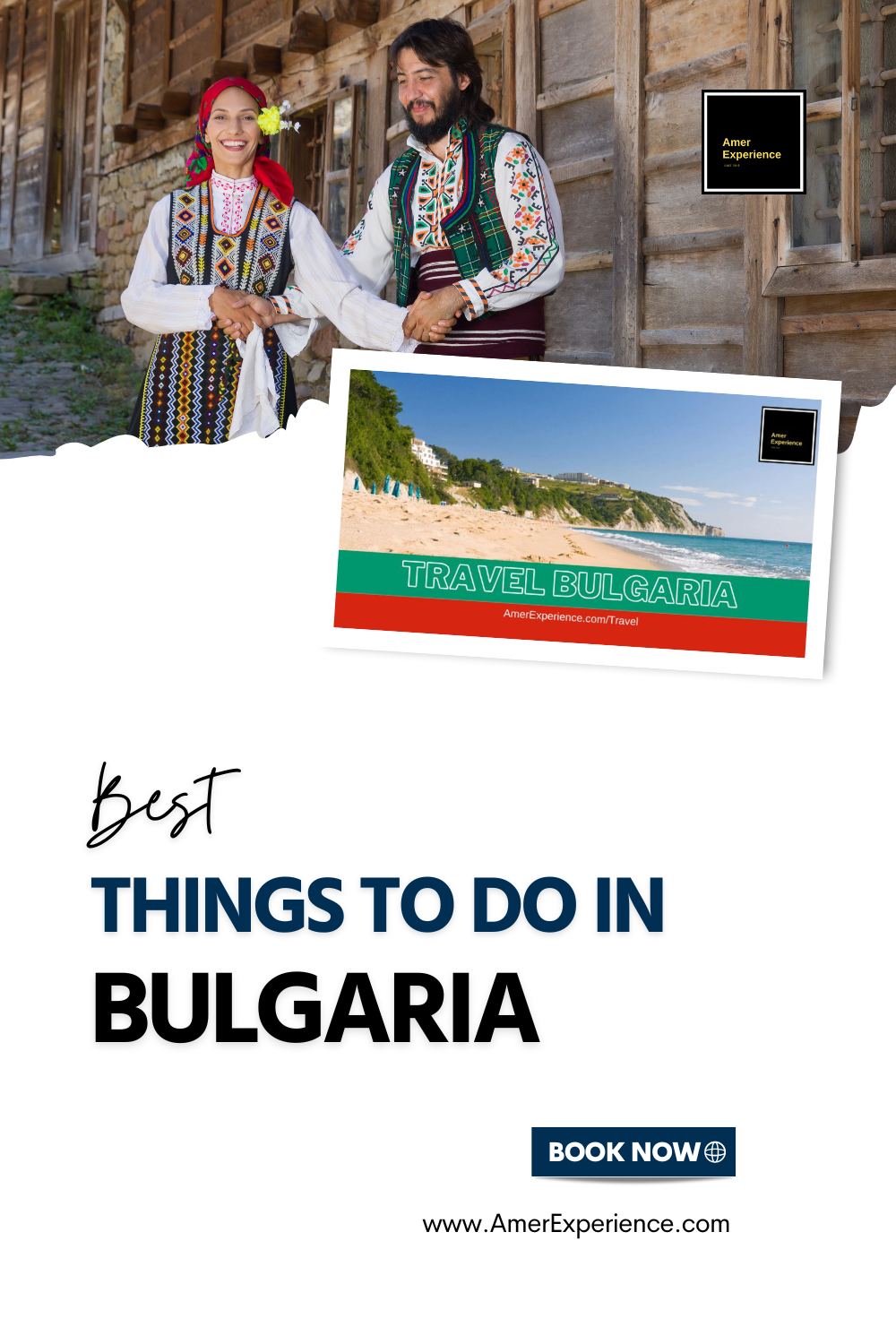
The TOP 10 attractions in Bulgaria 🇧🇬:
These ten places show why Bulgaria rewards a slower trip: short distances between very different destinations, from Sofia’s Ottoman-era churches to Plovdiv’s Roman theatre. Travelers with five to ten days can string most of these together in one loop.
10. Alexander Nevsky Cathedral→
The Alexander Nevsky Cathedral, located in Sofia, Bulgaria, is an iconic landmark renowned for its architectural grandeur and historical significance. Constructed between 1882 and 1912, this Neo-Byzantine masterpiece was built to honor the Russian soldiers who perished in the Russo-Turkish War, which ultimately led to Bulgaria’s liberation from Ottoman rule. With its imposing domes and intricate mosaics, the cathedral serves as both a place of worship and a testament to the enduring bond between Bulgaria and Russia. Inside, stunning frescoes and a grand altar create an atmosphere of reverence for locals and visitors alike.
9. Castle of Ravadinovo (In Love with the Wind)→
The Castle of Ravadinovo, also known as “In Love with the Wind,” is a fairy-tale structure near the village of Ravadinovo, designed by Bulgarian architect Georgi Tumpalov. It blends medieval, Renaissance, and fantasy architecture across lush gardens, lakes, and sculpture-lined paths. Inside, the rooms are decorated with mosaics and woodwork, and the castle often hosts events and cultural festivals throughout the year.
Castle of Ravadinovo (In Love with the Wind)→
8. Rozhen Monastery→
Rozhen Monastery, near the town of Melnik in the Pirin Mountains, is one of Bulgaria’s oldest and best-preserved medieval monasteries. Dating to the 13th century, it’s known for its frescoes, stone walls, and wooden iconostases, and offers a quiet counterpoint to the busier monastery sites elsewhere in the country.
7. Varna Archaeological Museum→
The Varna Archaeological Museum, established in 1887, houses artifacts from the prehistoric era to the late Middle Ages. It’s home to the world’s oldest gold treasure, dating to the 5th millennium BC and discovered in the Varna Necropolis — a find that reshaped understanding of ancient burial customs along the Black Sea coast.
6. Bachkovo Monastery→
Bachkovo Monastery, near Asenovgrad, is one of Bulgaria’s largest and oldest Eastern Orthodox monasteries. Founded in 1083 by Georgian brothers Gregory and Abbot Abasii Bakuriani, it includes the Church of the Virgin Mary and an ossuary with 11th-century murals, and remains a working pilgrimage site.
37 Europe Travel Guides & 125+ World Travel Guides by AmerExperience.com: Download For Free
Unlock the ultimate travel guide – your personal eBook for exploring 37 European countries and 125+ global destinations. In a practical PDF format, it’s your quick guide to seamless travel planning and discovering the best things to do at your chosen destinations.
5. Boyana Church→
Boyana Church, on the outskirts of Sofia, is a UNESCO World Heritage Site known for medieval frescoes dating to 1259, among the finest examples of European medieval art. Built in three stages between the 10th and 19th centuries, it reflects the evolution of Bulgarian church architecture across nearly a millennium.
4. Tsarevets Fortress→
Tsarevets Fortress in Veliko Tarnovo was the political and religious center of the Second Bulgarian Empire from 1185 to 1393. The hilltop site includes defensive walls, the restored Patriarchal Cathedral, and Baldwin’s Tower, and hosts cultural events and festivals throughout the year.
3. Belogradchik Fortress (Kaleto)→
Belogradchik Fortress, perched on the striking Belogradchik Rocks in northwest Bulgaria, dates to Roman times and was later expanded under Byzantine and Ottoman rule. The rock formations themselves are the draw as much as the fortress — a combined stop for history and landscape.
Belogradchik Fortress (Kaleto)→
2. Rila Monastery→
Rila Monastery, founded in the 10th century by the hermit Ivan Rilski, is Bulgaria’s most visited monastery and a national symbol. Its architecture combines intricate woodwork, stone carvings, and vibrant frescoes, set in the Rila Mountains — most visitors combine it with a day trip from Sofia.
1. Plovdiv Old Town (Stari Grad)→
Nestled on the historical hills of Nebet Tepe, Dzhambaz Tepe, and Taksim Tepe, the Old Town of Plovdiv is a 35-hectare architectural and historical reserve blending Thracian, Roman, and Bulgarian Revival culture. The well-preserved Roman theatre, built under Emperor Trajan, still hosts performances today.
Plovdiv Old Town (Stari Grad)→
Hisar Kapia, a medieval gate, and the Eastern gate of Philippopolis illustrate the city’s strategic importance through the ages. Revival-era houses like the Balabanov and Hindliyan reflect the wealth of Plovdiv’s 19th-century merchant class, and many now serve as museums. Since 2004, the Old Town has been on UNESCO’s World Heritage tentative list.
Source: Wikipedia
Discover these and more tours in Bulgaria 🇧🇬!
Hotel reservations in Bulgaria 🇧🇬
Bulgaria: History, Culture and Nature at a Glance
Bulgaria sits at the heart of the Balkans, combining a turbulent history, layered cultural influences, and landscapes ranging from the Black Sea coast to the Balkan and Rhodope mountain ranges.
History
Thracian and Roman roots: Ancient Thracian civilizations left behind archaeological treasures including the Thracian Tomb of Kazanlak and the ancient core of Plovdiv, one of the oldest continuously inhabited cities in Europe.
The First and Second Bulgarian Empires: Bulgaria emerged as a medieval power in the 7th century under Khan Asparuh. The legacy of this era survives in the frescoes of Boyana Church and the fortress of Tsarevets in Veliko Tarnovo.
Ottoman rule and after: Centuries of Ottoman rule left a lasting imprint on architecture and cuisine, visible today in Old Town Nessebar’s cobblestone streets and Sofia’s historic mosques. Bulgaria joined the European Union in 2007 and has since modernized rapidly.
Culture
Bulgarian folk traditions run deep, from the gaida (bagpipe) and kaval (wooden flute) heard in mountain villages to a cuisine blending Mediterranean, Middle Eastern, and Eastern European influences — shopska salad, banitsa, and kavarma stew among the staples. Painters like Vladimir Dimitrov and writers like Ivan Vazov remain central to Bulgarian cultural identity.
Nature
The Balkan Mountains run the length of the country; the Rila Mountains hold the Seven Rila Lakes, among Europe’s best hiking; and the Rhodope Mountains offer a quieter, more remote alternative. The Black Sea coast — Sunny Beach, Golden Sands, Sozopol, Nessebar — supplies the beach half of most itineraries.
Explore More AmerExperience Travel Guides
Frequently Asked Questions
How many days do I need in Bulgaria?
Four to five days covers Sofia, Rila Monastery, and Plovdiv. Seven to ten days lets you add the Black Sea coast or the Rhodope Mountains without rushing.
When is the best time to visit Bulgaria?
May, June, and September offer the best balance of good weather and lower crowds. July and August are peak season on the Black Sea coast; December to March is ski season in Bansko.
Is Bulgaria expensive to visit?
No — Bulgaria is one of the more affordable countries in the EU. Hotels, meals, and transport all cost noticeably less than in Western Europe, though Black Sea resort towns rise in price during July and August.
Is the Black Sea coast worth adding to a Bulgaria trip?
If you have seven or more days, yes. Sozopol and Nessebar offer old-town charm alongside beaches, while Varna adds a real city with museums and nightlife. On a four-day trip, it’s usually cut in favor of Sofia and the monasteries.
Do I need a car, or is public transport enough?
Public transport covers Sofia, Plovdiv, and Varna well. A car is worth renting if you want to reach Belogradchik, Rila Monastery on your own schedule, or the smaller Rhodope villages.
Welcome to our Bulgaria travel guide.
Warm regards,

Lassi Pensikkala
Destination expert & travel writer
Updated continuously · © Lassi Pensikkala
This guide is part of my 37 Europe and 125+ World Travel Guides, curated from decades of travel experience. Read and download the guides for free here:
👉 Explore the best things to do in Europe:
Best things to do in Europe – 37 travel guides
Related guides
• Best things to do in Romania
Advertisement
This website contains links and affiliate links to other websites (as affiliate partner we get commissions paid for the sales made by these websites). Some of those websites may be operated by third parties. As an Amazon Associate we earn from qualifying purchases.