

Slovakia is one of Central Europe’s most rewarding destinations for travelers who enjoy historic cities, dramatic castles, mountain landscapes and places that still feel relatively undiscovered. From Bratislava on the Danube to the High Tatras, Spiš Castle, Banská Štiavnica and traditional mountain villages, Slovakia combines a surprising amount of history and nature within a compact country.
This Slovakia travel guide brings together the best things to do, places to visit, practical travel ideas and booking resources for planning your trip.
Plan your trip
Tours & activities
Discover top-rated travel experiences worldwide.
Flights & hotels
Compare places to stay and plan your journey.
RecommendedTravel insurance
Prepare for unexpected situations during your trip.
Travel safety
Safety guidance, emergency numbers and useful contacts.

200+ Travel Destination Guides
Explore curated destination guides for the USA, Europe, Latin America and Scandinavia.
Recognized within Google’s AI-powered travel search results.
A growing travel-guide network covering the USA, Europe, Latin America and Scandinavia.
International insights for business travellers, entrepreneurs and decision-makers.
Download the ebooks →Disclosure: As an affiliate, I earn from qualifying purchases made through links on this page at no extra cost to you.
AmerX Travel Pick: Explore Slovakia
Compare tours, day trips and experiences in Bratislava and across Slovakia with Viator.
Why visit Slovakia?
Slovakia sits at the geographical and cultural crossroads of Central Europe. It borders Austria, the Czech Republic, Poland, Ukraine and Hungary, making it particularly easy to combine with a wider European itinerary.
Yet Slovakia deserves more than a quick stop between better-known neighbors. Bratislava offers a compact historic capital on the Danube, while beyond the city you find UNESCO-listed towns, enormous medieval fortifications, caves, thermal spas, forests and the spectacular peaks of the High Tatras.
Distances are relatively manageable, which makes Slovakia especially interesting for travelers who want to combine culture, food, history and outdoor experiences during the same journey.
Slovakia at a glance
| Capital | Bratislava |
| Language | Slovak |
| Currency | Euro (€) |
| Region | Central Europe |
| Best for | Castles, mountains, historic towns, hiking, culture and road trips |
| Major mountain region | High Tatras |
| Main gateway | Bratislava |
| Good combinations | Austria, Czech Republic, Hungary and Poland |
10 best things to do in Slovakia
If this is your first journey through Slovakia, these ten places provide an excellent introduction to the country’s cities, castles, history and landscapes.
1. Bratislava Old Town
Bratislava’s historic center is compact enough to explore on foot and is filled with cobbled streets, old squares, cafés, churches and architecture reflecting centuries of Central European history.
Walk through Michael’s Gate, explore the area around the Main Square and Hviezdoslav Square, and allow time simply to wander. Bratislava works particularly well as a relaxed city break because many of its principal sights are close together.
Explore Bratislava Old Town experiences →
2. Bratislava Castle
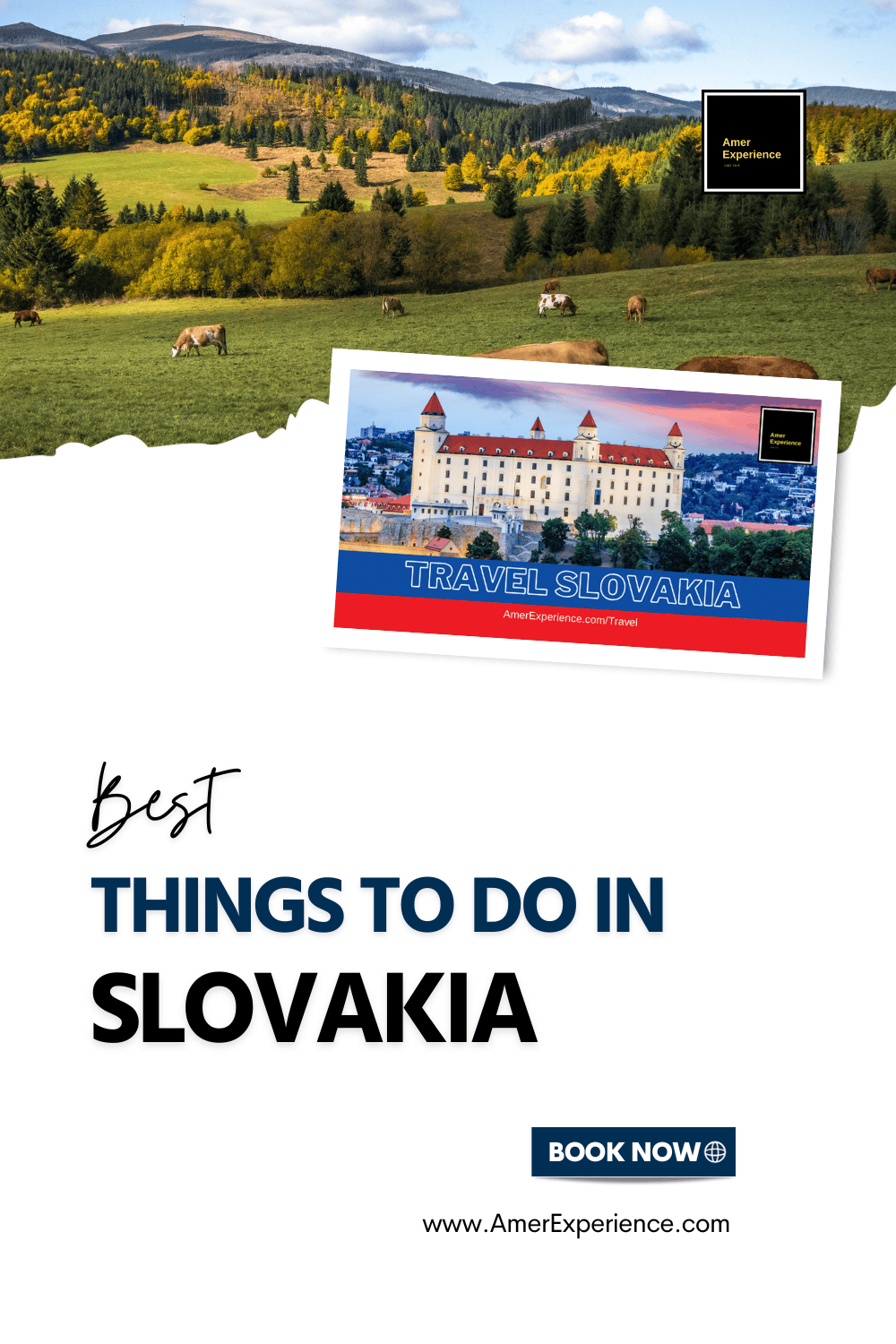
Standing above the Danube, Bratislava Castle is the city’s defining landmark. Its elevated position gives visitors broad views across Bratislava and the surrounding region, while the castle itself provides an introduction to Slovak history.
3. High Tatras
The High Tatras are essential to understanding Slovakia beyond Bratislava. This compact alpine mountain range offers hiking, mountain lakes, dramatic peaks, cable-car excursions and winter sports.
Poprad is an important gateway, while destinations such as Štrbské Pleso, Starý Smokovec and Tatranská Lomnica provide convenient bases for exploring the mountains. For nature-oriented travelers, the Tatras can easily justify several days of a Slovakia itinerary.
4. Spiš Castle
The immense ruins of Spiš Castle dominate the surrounding countryside and form part of a UNESCO World Heritage property. It is one of the most visually impressive historic sites in Slovakia and an excellent stop on a journey through eastern Slovakia.
5. Orava Castle
Few Slovak castles have a setting as dramatic as Orava Castle. The fortress rises high above the Orava River on a rocky outcrop, creating one of the country’s classic medieval landscapes.
The castle is particularly interesting for travelers combining northern Slovakia with the Tatras or continuing toward Poland.
6. Banská Štiavnica
Historic Banská Štiavnica grew around mining and today preserves an unusually atmospheric collection of old streets, mining heritage and architecture surrounded by wooded hills.
Its historic town and surrounding technical monuments are UNESCO-listed. It is a particularly good choice for travelers interested in industrial heritage as well as traditional European townscapes.
7. Devin Castle
Devin Castle stands near the meeting of the Danube and Morava rivers, only a short journey from central Bratislava. Its ruined fortifications and strategic location reveal why this point was important for centuries.
It is one of the easiest ways to add history and countryside to a Bratislava stay without undertaking a long excursion.
8. St. Martin’s Cathedral
St. Martin’s Cathedral is one of Bratislava’s most important historic buildings. For centuries Bratislava—then widely known as Pressburg—played an important role within the Kingdom of Hungary, and the cathedral became associated with royal coronations.
Discover St. Martin’s Cathedral →
9. Primate’s Palace
Located in Bratislava’s historic center, the elegant Primate’s Palace adds another layer to the city’s Habsburg-era and Central European history. Its refined interiors contrast nicely with the medieval streets nearby.
10. Slovak National Theatre and the Danube waterfront
Bratislava’s cultural life extends well beyond its medieval center. The Slovak National Theatre represents the country’s opera, ballet and dramatic traditions, while the modern Danube waterfront shows a different side of the capital.
Discover Bratislava experiences →
AmerX Travel: Tours & Experiences
Walking tours, castles, day trips and local experiences can make it easier to discover Slovakia beyond the obvious sights.
AmerExperience may earn a commission from qualifying bookings.
Bratislava: Slovakia’s compact capital
Bratislava is one of Europe’s smaller capitals, and that is part of its appeal. Instead of spending much of your visit crossing a huge metropolitan area, you can walk between the Old Town, Bratislava Castle, St. Martin’s Cathedral and the Danube waterfront.
The city also occupies an unusual position close to both Austria and Hungary. Vienna and Bratislava are among Europe’s closest national capitals, making Slovakia particularly easy to incorporate into a Central European itinerary.
How long should you stay in Bratislava?
One full day provides a good introduction to the historic center and castle. Two nights allow a more relaxed experience and time for Devin Castle, museums, restaurants or the Danube. Travelers exploring the rest of Slovakia can then continue toward the country’s central and northern regions.
The High Tatras: Slovakia’s mountain side
A Slovakia guide focused only on Bratislava misses one of the country’s greatest strengths. The High Tatras form a dramatic natural contrast to the capital and are among Central Europe’s most accessible mountain destinations.
Summer attracts hikers and nature travelers, while winter brings skiing and other snow activities. Mountain settlements including Štrbské Pleso, Starý Smokovec and Tatranská Lomnica make useful bases, and Poprad provides important transport connections.
Castles and historic Slovakia
Castles are one of the strongest themes for a Slovakia road trip. Bratislava Castle and Devin Castle are easy additions to a capital-city visit, while Spiš and Orava reveal the more dramatic landscapes of the country’s interior and north.
Bojnice Castle is another worthwhile addition for travelers with more time. Rather than trying to see every fortress, choose two or three that fit naturally into your route.
What to eat in Slovakia
Traditional Slovak cuisine is hearty and closely connected to the country’s agricultural and mountain heritage. Potatoes, cabbage, dumplings, sheep cheese and meat appear frequently.
Bryndzové halušky is perhaps the best-known Slovak dish: small potato dumplings served with bryndza sheep cheese, traditionally accompanied by bacon. Soups, dumplings and regional cheeses are also worth trying.
Slovakia also has a wine tradition that receives far less international attention than those of some neighboring countries. Travelers interested in food and wine can explore wine-producing areas particularly in the country’s south and southwest.
When is the best time to visit Slovakia?
Spring: Good for cities, castles and countryside before the busiest summer period.
Summer: Excellent for hiking, mountain travel and longer road trips, especially in the Tatras.
Autumn: Cooler temperatures, changing landscapes and an attractive season for cultural touring.
Winter: Bratislava gains a different atmosphere during the festive season, while mountain regions attract winter-sports visitors.
Getting around Slovakia
Trains and buses connect Bratislava with many of Slovakia’s principal cities and regions. A rental car becomes particularly useful for travelers planning a castle-focused itinerary, smaller towns or more remote natural areas.
Bratislava itself is compact and highly walkable. Public transportation covers areas beyond the historic center, so a car is generally unnecessary for a city-only visit.
Where to stay in Slovakia
For a first visit, Bratislava’s Old Town and surrounding central districts are convenient for sightseeing. Travelers heading into the mountains can consider Poprad, Štrbské Pleso, Starý Smokovec or Tatranská Lomnica depending on their itinerary.
AmerX Travel: Find Your Hotel in Slovakia
Compare accommodation for Bratislava, the High Tatras and destinations across Slovakia.
Compare available properties, locations and prices before booking.
A simple Slovakia itinerary
3 days: Bratislava, Bratislava Castle, Old Town and Devin Castle.
5–7 days: Combine Bratislava with Banská Štiavnica and one of Slovakia’s major castle regions.
7–10 days: Bratislava + central Slovakia + High Tatras + Spiš Castle, creating a much more complete picture of the country.
Combine Slovakia with Central Europe
Slovakia’s location makes it exceptionally convenient for a multi-country Central European journey. Bratislava can be combined with Vienna, Budapest and Prague, while northern Slovakia connects naturally with southern Poland.
Continue planning with our neighboring destination guides:
- Czech Republic – Best Things to Do
- Hungary – Best Things to Do
- Austria – Best Things to Do
- Europe – 37 Travel Guides
Slovakia travel FAQs
Is Slovakia worth visiting?
Yes. Slovakia combines a historic European capital, major castles, UNESCO heritage, mountain scenery and traditional towns within relatively short distances. It is particularly attractive for travelers interested in Central Europe beyond the most visited capitals.
What is Slovakia best known for?
Internationally, Slovakia is particularly associated with Bratislava, its castles, the High Tatras, mountain landscapes, historic mining towns and traditional Central European culture.
How many days do you need in Slovakia?
Two or three days can cover Bratislava and a nearby excursion, but seven to ten days provides a much better introduction to Slovakia by allowing time for the capital, historic towns, castles and the High Tatras.
Can you visit Bratislava from Vienna?
Yes. The two capitals are unusually close to each other and have convenient transport connections. Bratislava therefore works well either as a standalone city break or as part of a wider Austria–Slovakia itinerary.
Do you need a car in Slovakia?
Not necessarily. Bratislava is easy to explore without a car and major destinations have public transport connections. A car becomes more useful when combining smaller towns, castles and rural or mountain destinations.
About this Slovakia travel guide
I am Lassi Pensikkala, founder of AmerExperience.com and an international travel professional. My approach to destination guides combines decades of international travel-business experience with practical research and a European perspective.

Lassi Pensikkala
Destination expert & travel writer
Updated 2026 · © Lassi Pensikkala
This guide forms part of the AmerExperience collection of European and worldwide destination guides.
Plan Your Slovakia Journey
Compare experiences and accommodation before you travel.
Affiliate disclosure: AmerExperience contains affiliate links. If you make a qualifying booking through selected links, we may receive a commission at no additional cost to you.