
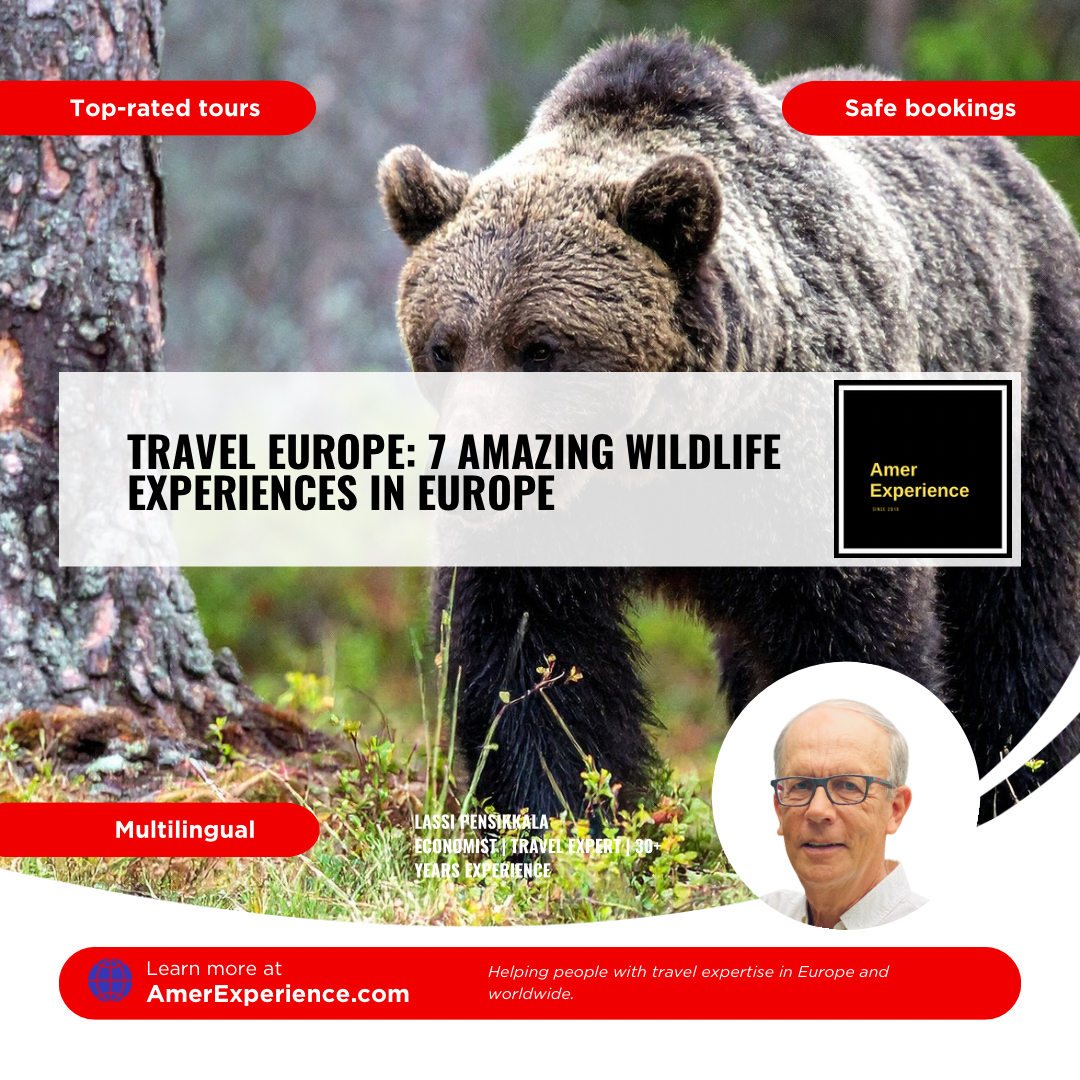
Travel expert review about the article in TravelAwaits
The article published by TravelAwaits highlights a side of Europe that many travelers still underestimate. For decades Europe has mainly been associated with historic cities, gastronomy, architecture, museums, and cultural landmarks. Those attractions continue to define European tourism, but modern travelers increasingly search for something deeper and more emotional. They want silence, nature, wildlife, landscapes, and experiences that feel authentic instead of overly commercialized.
That shift has made wildlife tourism one of the most interesting growth areas in Europe today.
The article demonstrates very well that extraordinary wildlife experiences are not limited to Africa or remote exotic destinations. Europe itself offers remarkable biodiversity combined with excellent infrastructure, accessibility, and safety. This combination is one of Europe’s strongest competitive advantages in global tourism.
Depending on the region, travelers can experience Arctic wildlife, whales, brown bears, wolves, dolphins, seals, migratory birds, untouched forests, mountain ecosystems, and spectacular coastal landscapes. Northern Europe has become particularly attractive for travelers looking for peaceful and nature-oriented experiences. Countries like Finland, Norway, Sweden, Iceland, and Denmark have positioned themselves very successfully within this segment because they combine protected natural areas with high-quality tourism services.
Travelers visiting Scandinavia often discover that wildlife experiences can easily be combined with urban culture and design-focused cities. Someone spending a few days in Helsinki may continue north toward forests, lakes, and Arctic regions filled with nature experiences. The same applies to Stockholm, where the archipelago itself already creates a strong connection with nature before travelers even move deeper into Scandinavia.
For travelers interested in discovering these destinations more deeply:
Best things to do in Finland
and
offer excellent inspiration for combining wildlife, culture, and slow travel experiences.
Multilingual Travel Destination Magazines Free Access
What makes Scandinavian destinations especially attractive today is the atmosphere they offer. Many travelers are increasingly tired of overcrowded tourism, long airport queues, packed city centers, and destinations that feel almost identical everywhere. Nature tourism offers the opposite experience. It slows the rhythm down and allows people to reconnect with the environment in a much more personal way.
The TravelAwaits article reflects this change in traveler mentality very clearly.
Modern tourism has moved increasingly toward emotional value. Travelers are no longer simply collecting destinations. They are searching for experiences that create memories and improve their sense of wellbeing. Wildlife tourism responds perfectly to this demand because encounters with nature often remain emotionally powerful long after the trip itself has ended.
Seeing whales along the Norwegian coast, observing bears in Finnish forests, or experiencing silence in remote Icelandic landscapes can become defining moments for travelers. In many cases, these experiences create stronger memories than famous monuments or crowded tourist attractions.
Travelers interested in exploring these Nordic destinations further can also discover:
Best things to do in Norway
and
where nature, design, coastal culture, and slow travel increasingly merge together.
Plan your trip
Tours & activities
Discover top-rated travel experiences worldwide.
Flights & hotels
Compare places to stay and plan your journey.
RecommendedTravel insurance
Prepare for unexpected situations during your trip.
Travel safety
Safety guidance, emergency numbers and useful contacts.

200+ Travel Destination Guides
Explore curated destination guides for the USA, Europe, Latin America and Scandinavia.
Recognized within Google’s AI-powered travel search results.
A growing travel-guide network covering the USA, Europe, Latin America and Scandinavia.
International insights for business travellers, entrepreneurs and decision-makers.
Download the ebooks →Disclosure: As an affiliate, I earn from qualifying purchases made through links on this page at no extra cost to you.
Another important aspect is that wildlife tourism fits naturally together with cultural travel. A traveler may combine city experiences, gastronomy, local traditions, road trips, and national parks within the same journey. This creates a richer and more balanced travel experience.
Southern Europe is also seeing strong growth in nature and ecotourism. Destinations traditionally known for beaches or historic cities increasingly promote birdwatching, marine biodiversity, mountain landscapes, and protected coastal areas. Travelers are discovering that Europe offers not only culture and history, but also extraordinary natural diversity.
From a destination management perspective, this trend is very positive because wildlife tourism usually distributes tourism income more evenly across regions. Instead of concentrating all tourism activity in famous capitals or mass tourism resorts, smaller communities benefit as well. Local guides, small hotels, family-owned restaurants, transportation providers, and conservation initiatives all gain opportunities from responsible nature tourism.
This creates a more sustainable tourism model in the long term.
Wildlife travelers also tend to travel differently from traditional mass tourists. They often stay longer, spend more thoughtfully, and value quality experiences, local expertise, photography, gastronomy, and meaningful interaction with the destination. This creates economic benefits while often generating less pressure on tourism infrastructure compared with high-volume tourism models.
As someone who has worked extensively in international tourism and destination management, I believe Europe’s future tourism growth will increasingly depend on its ability to combine culture, sustainability, and authentic nature experiences. Europe already possesses world-class transportation systems, strong tourism infrastructure, and excellent accessibility. The next competitive advantage lies in preserving and promoting its natural environments intelligently and sustainably.
The article from TravelAwaits indirectly highlights another very important reality in modern tourism. Travelers today are often searching for peace. They want destinations that help them disconnect mentally from constant noise, stress, and digital overload. Wildlife tourism provides exactly that kind of emotional escape.
At the same time, this growth also creates responsibility. Nature tourism must be managed carefully to avoid damaging fragile ecosystems. Responsible guiding, conservation efforts, visitor limits, and environmental protection are essential if these experiences are to remain sustainable in the future.
Fortunately, many European countries already have relatively strong environmental policies and conservation systems. That gives Europe an important advantage as travelers become increasingly conscious about sustainability and responsible tourism practices.
One of Europe’s greatest strengths is flexibility. Wildlife experiences can easily be combined with cultural travel, gastronomy, road trips, wellness tourism, cruises, or photography journeys. A traveler can move from vibrant city life to complete natural silence within only a few hours.
That contrast is one reason why Europe remains one of the world’s most complete and emotionally rewarding travel regions.
Additional tips to readers
I recommend comparing experiences through:
Viator wildlife and nature experiences in Europe
and
GetYourGuide Europe experiences
These platforms help travelers compare prices, read verified customer reviews, evaluate safety standards, and discover specialized local excursions that are not always easy to find independently.
For more inspiration:
37 Europe travel guides – free download
FAQ
Is Europe a good destination for wildlife tourism?
Yes. Europe offers highly diverse wildlife experiences including Arctic landscapes, whales, bears, forests, marine ecosystems, and protected national parks.
Which countries are best for wildlife experiences in Europe?
Finland, Norway, Sweden, Iceland, and Scotland are among the strongest destinations for nature and wildlife tourism.
Why is wildlife tourism becoming more popular?
Travelers increasingly seek peaceful, authentic, sustainable, and emotionally meaningful experiences connected to nature.
Español – Français – Portugués – Dansk – Deutsch – Italiano – Nederlands – Norsk – Svenska – 日本語 – Suomi
Warm regards,

Lassi Pensikkala
Destination expert & travel writer
Updated 2026 · © Lassi Pensikkala
This guide is part of my 125 USA, Europe, Latin America and Scandinavia Travel Guides, curated from decades of travel experience. Read and download the guides for free here
Claim Your Free Collection Now
AmerExperience is one of the most comprehensive independent multilingual travel publishing platforms covering destinations across Europe, the Americas, and beyond.
The world is waiting. Get your hands on the most ambitious free travel resource.
Disclosure: As an affiliate, I earn from qualifying purchases made through links in this post at no extra cost to you.
125 Free Travel Guides
Explore our collection of free travel guides for Europe, the USA and Latin America, created for travelers who want practical destination insight in one place.
Find more curated travel experiences and book safely with trusted partners on our Travel Hub → AmerExperience Travel Hub
