
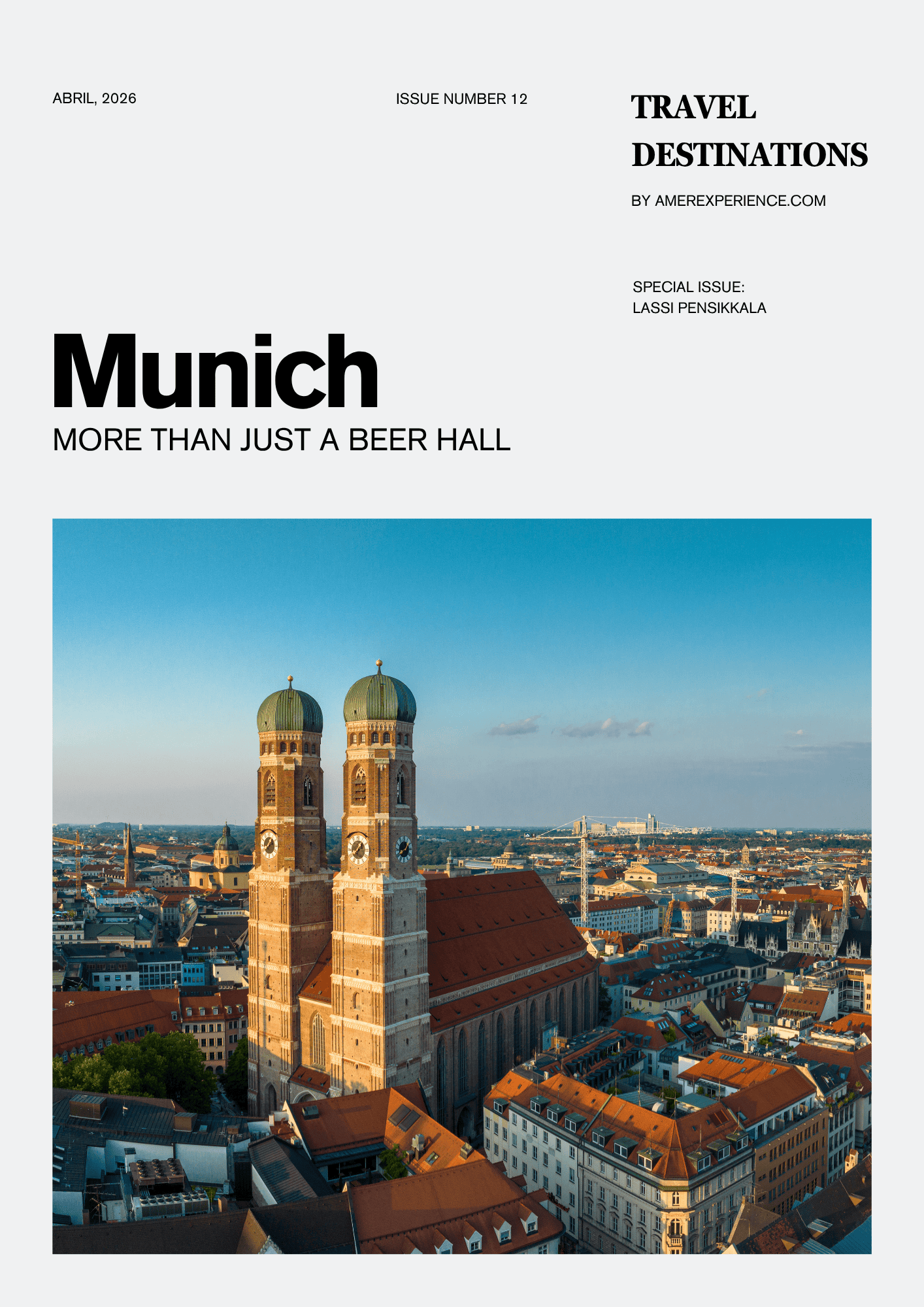
Munich: More than just a beer hall – To truly understand Munich, one must move beyond the superficial imagery of frothing beer steins and the boisterous crowds of the world-famous Oktoberfest. While those cultural touchstones are undeniably significant, they represent only the loudest facet of a city that is defined by a much quieter, deeper, and more sophisticated philosophy of living. The soul of Munich resides in the untranslatable Bavarian concept of Gemütlichkeit. While English dictionaries often reduce this to “coziness,” in the context of this Alpine metropolis, it represents a profound socio-economic and cultural agreement regarding the democratic ownership of public space and the sanctity of personal leisure.
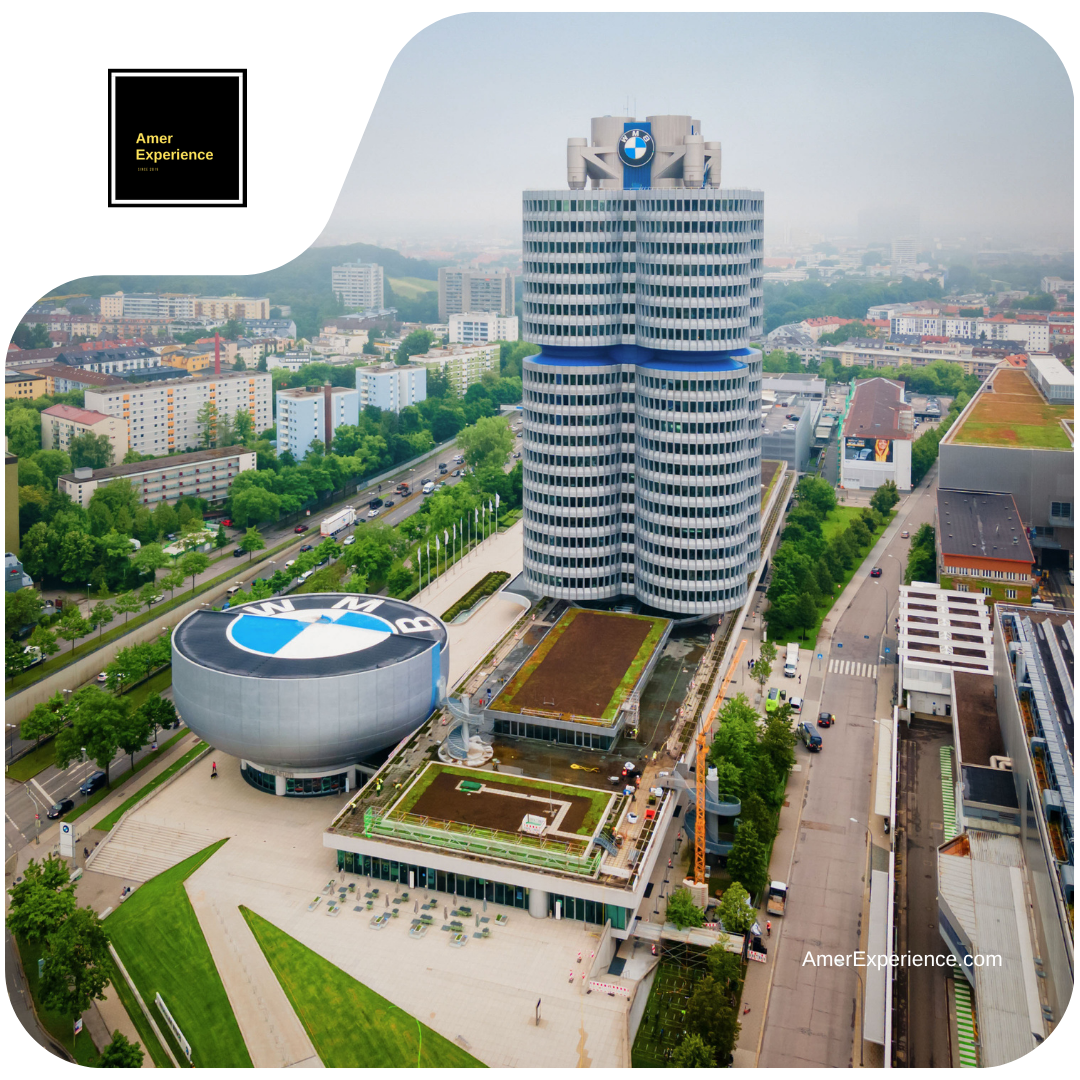
Munich is a city of “Active Leisure.” It is an economic powerhouse—home to global giants like BMW and Siemens—yet it refuses to succumb to the frantic, soul-eroding pace of other financial hubs. Here, the rigid precision of German engineering and work ethic is constantly mediated by a laid-back, almost Mediterranean flow that flows down from the nearby Alps. This is a city where the urban environment is not a concrete jungle but a collective living room. This philosophy is most visible in the city’s Gartenkultur (garden culture). In Munich, a park is not just a patch of grass; it is a vital organ where social hierarchies dissolve. On any given sunny afternoon, you will find a high-ranking corporate executive sharing a communal wooden bench with a university student. Both are enjoying the same brand of local beer, and both are likely eating pretzels they brought from home in a picnic basket.
This sense of shared ownership and presence is the real insight for the traveler. Munich teaches us that a city can be a high-tech center of innovation while remaining deeply rooted in the rhythms of nature and the importance of community. It is a blueprint for urban living where progress does not come at the expense of peace.
10 Elements to Experience
- Marienplatz: This is the geographical and emotional heart of the city. Dominated by the Neo-Gothic New Town Hall (Neues Rathaus), it is famous for the mechanical Glockenspiel that performs three times daily. Standing here, surrounded by historical architecture, you feel the centuries of Bavarian history converging in a single square.
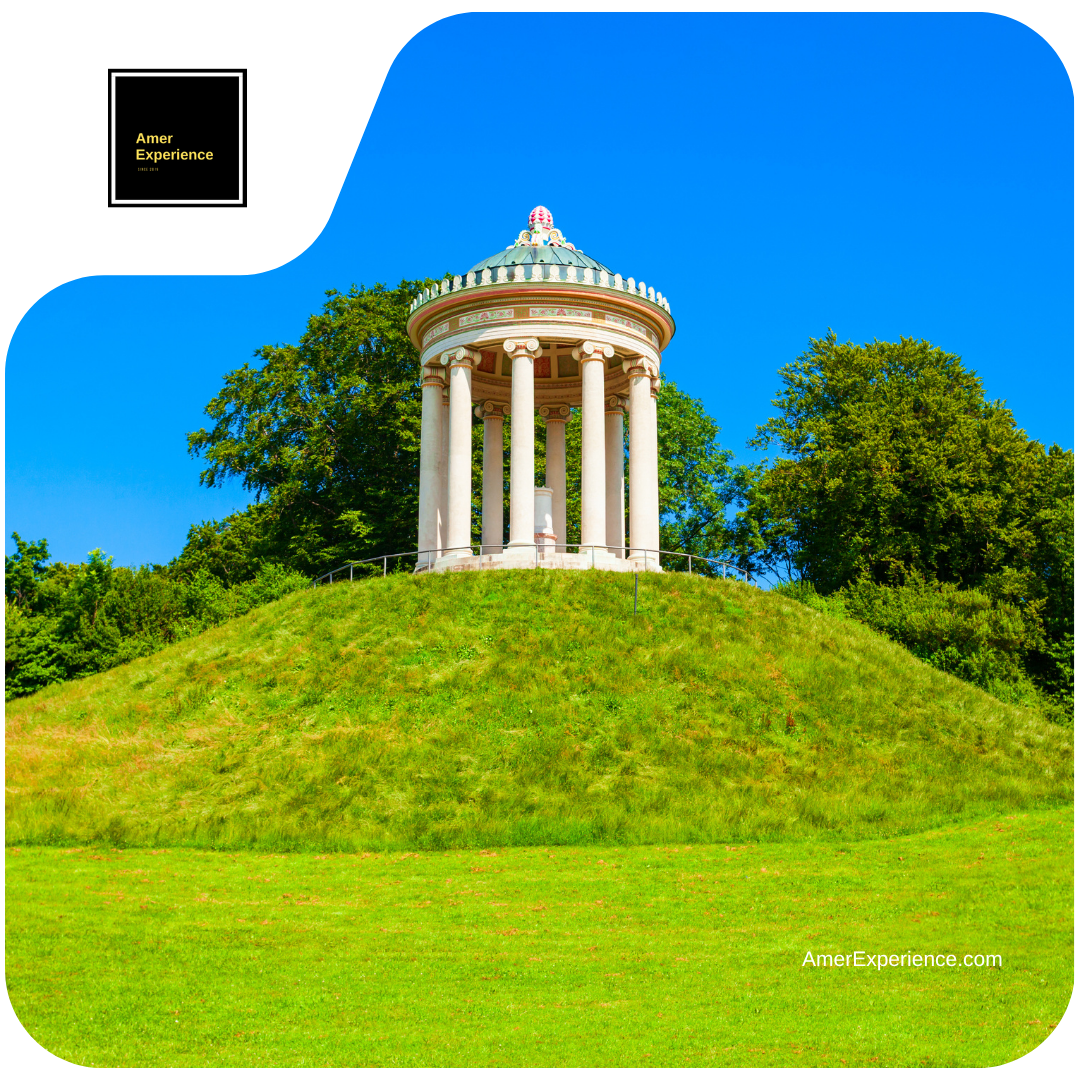
- Englischer Garten: One of the largest urban parks in the world, it is larger than New York’s Central Park. It features sprawling meadows, a Japanese Teahouse, and various beer gardens. It serves as the primary “green lung” of the city, where locals go to escape the urban noise without ever leaving the city limits.
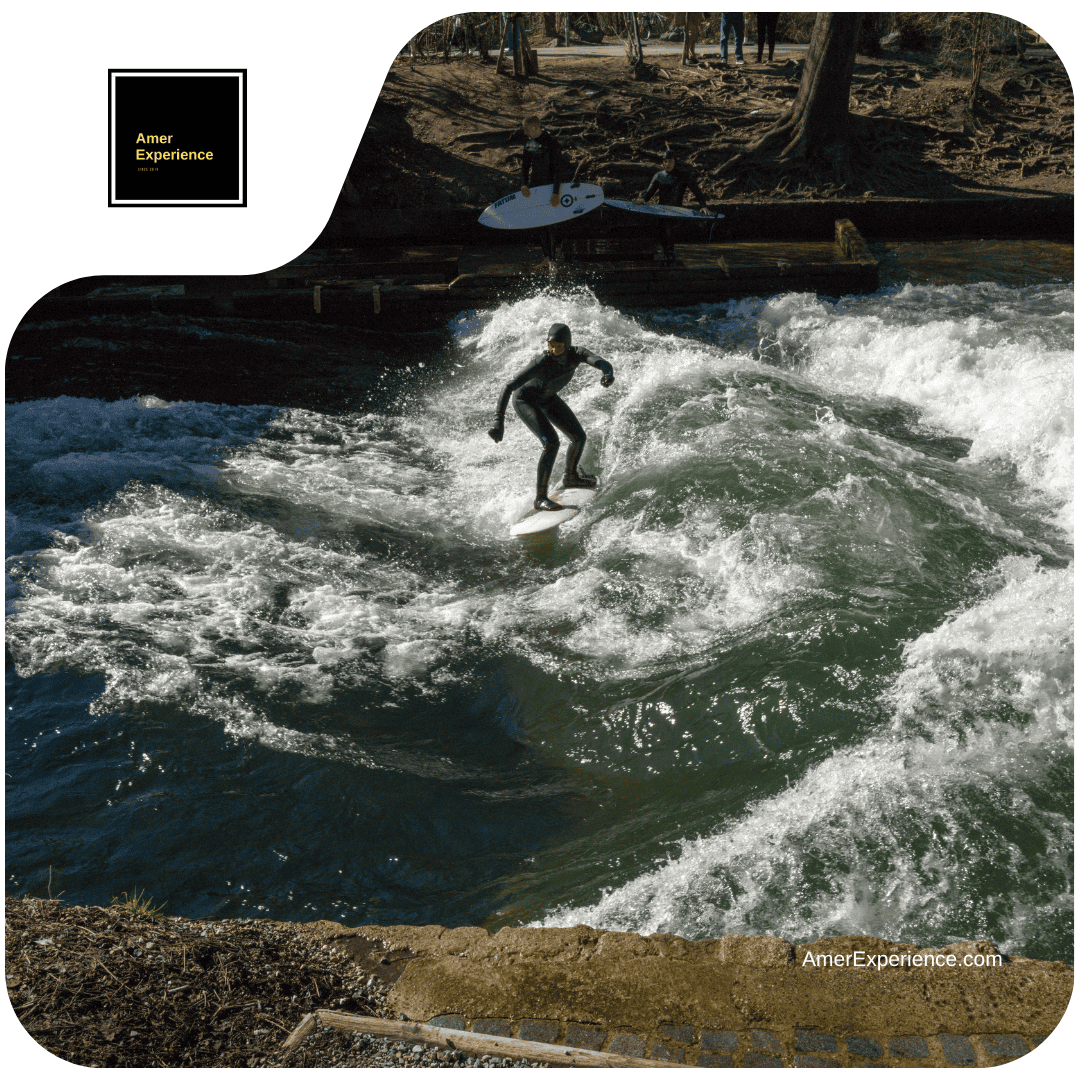
- Eisbachwelle: Located at the entrance of the Englischer Garten, this permanent standing wave on the Eisbach River is a marvel of urban ingenuity. Surfers from around the world come here to ride the icy currents, creating a surreal scene of surfboard-carrying locals on the city’s U-Bahn (subway) trains.
- Viktualienmarkt: Just a few steps from Marienplatz, this gourmet open-air market has been the center of Munich’s culinary life since the 1800s. From artisanal cheeses and wild game to exotic fruits and traditional Weisswurst, it is a sensory explosion and the perfect place for a high-quality, authentic lunch.
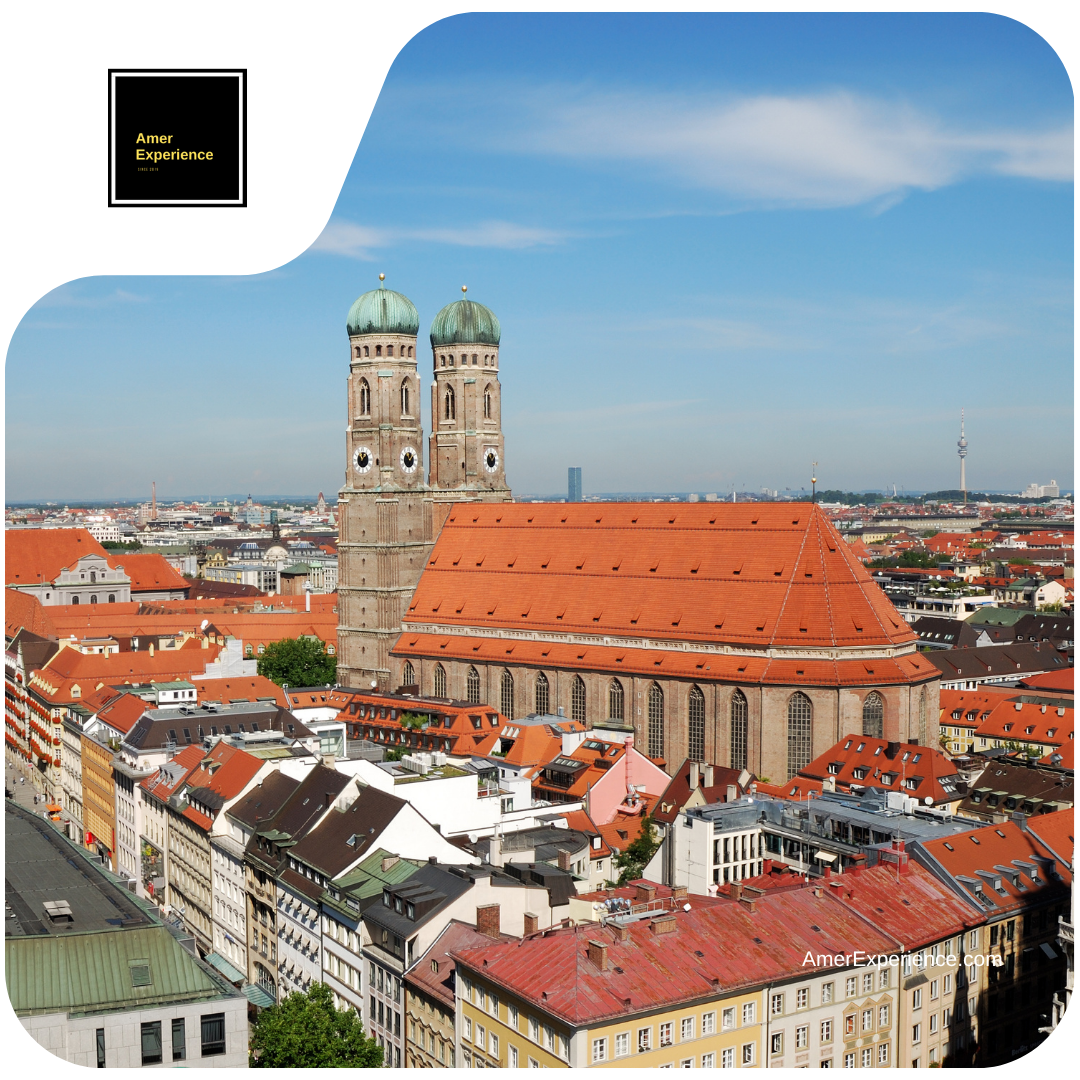
- Frauenkirche: The Cathedral of Our Dear Lady is the unmistakable icon of Munich. Its twin onion-domed towers are visible from almost anywhere in the city due to local laws that forbid buildings taller than the cathedral in the city center. The interior houses the mysterious “Devil’s Footprint.”
- The Residenz: The former royal palace of the Wittelsbach monarchs, this massive complex is a testament to the wealth and power of the Bavarian royalty. With 130 rooms open to the public, it showcases a staggering array of Renaissance, Baroque, and Rococo art and interior design.
- Deutsches Museum: Situated on an island in the Isar River, this is the world’s largest museum of science and technology. It covers everything from the earliest musical instruments to the latest breakthroughs in aerospace engineering, making it an essential stop for curious minds of all ages.
- Olympiapark: Constructed for the 1972 Summer Olympics, the park remains a masterpiece of modern architecture with its revolutionary “tent” roof structures. Visitors can take a roof walk on the stadium or ascend the Olympic Tower for a 360-degree view of the city and the Alps.
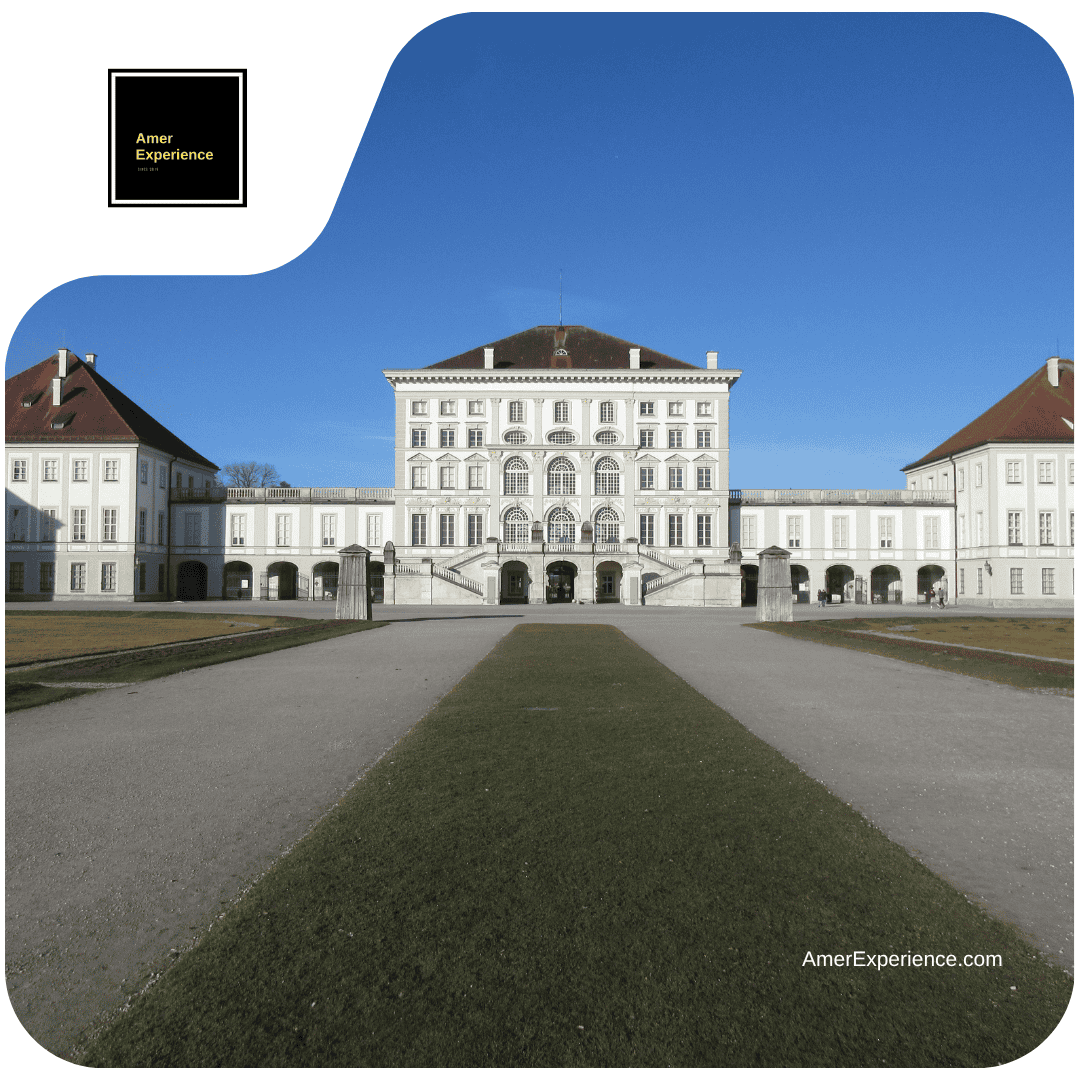
- Schloss Nymphenburg: This grand Baroque palace was the summer residence of the rulers of Bavaria. Its massive 200-hectare park, complete with canals and hidden pavilions, offers a serene environment that feels worlds away from the city center, though it is easily reachable by tram.
- Hofbräuhaus am Platzl: While undeniably touristy, this beer hall is an essential historical touchstone. Founded in 1589, its vaulted ceilings and long wooden tables have hosted everyone from Mozart to Lenin. It is the purest architectural expression of Munich’s brewing heritage.
Ideas: Travel – Viaje – Reise – Resa – Matka
Disclosure: As an affiliate, I earn from qualifying purchases made through links in this post at no extra cost to you.
Local’s Secret Tip
To truly disappear into the local fabric of Munich, leave the city center and head to the Augustiner-Keller on Arnulfstraße. This is one of the oldest and most authentic beer gardens in the city, shaded by a dense canopy of ancient chestnut trees. The secret here is the “Self-Service” (Selbstbedienung) area. While most tourists wait for a waiter in the formal sections, locals bring their own tablecloths, baskets filled with cold cuts, radishes, and pretzels, and claim a wooden table. By centuries-old Bavarian law, beer gardens are required to allow patrons to bring their own food, provided they purchase their drinks on-site. This tradition fosters a communal, non-commercial atmosphere that is the absolute pinnacle of Gemütlichkeit.
What to Avoid
Avoid visiting Munich during the peak of Oktoberfest unless you have a dedicated table reservation and a high tolerance for massive crowds. During these two weeks, hotel prices can quadruple, and the city’s infrastructure is pushed to its limits. Furthermore, do not treat the city like a “party destination” where rules don’t apply. Munich is exceptionally safe and orderly, and the locals expect visitors to respect their quiet hours and traffic laws. Never cross the street when the pedestrian light is red (Ampelmännchen); even if no cars are coming, it is considered a major social faux pas and a bad example for children. Lastly, avoid ordering a “small beer” in a traditional hall; the standard is the Maß (one liter), and asking for a 300ml glass is often met with confusion or a polite suggestion to visit a cafe instead.
Planning Your Visit
- Best time to travel: Late spring (May and June) is the golden window, as the beer gardens are in full bloom and the weather is perfect for hiking. September (before Oktoberfest) is also beautiful. For a festive experience, December offers some of the best Christmas markets in Europe.
- Location:
How it looks actually
The visual reality of Munich is one of incredible architectural harmony. The streets are exceptionally clean, and there is a pervasive sense of order. You will see businessmen in suits and women in professional attire riding bicycles alongside people in traditional Lederhosen and Dirndls. The city is characterized by its wide, neoclassical boulevards and the turquoise, crystal-clear Alpine water of the Isar River.
Pro-traveler Toolkit
- Always carry cash. Despite being a modern city, many traditional Bavarian restaurants and small shops remain “Barzahlung” (cash only).
- Use the Stripe Ticket (Streifenkarte) for the MVV transit system. It is much more cost-effective than buying single tickets for every journey.
Plan your trip
Tours & activities
Discover top-rated travel experiences worldwide.
Flights & hotels
Compare places to stay and plan your journey.
RecommendedTravel insurance
Prepare for unexpected situations during your trip.
Travel safety
Safety guidance, emergency numbers and useful contacts.

200+ Travel Destination Guides
Explore curated destination guides for the USA, Europe, Latin America and Scandinavia.
Recognized within Google’s AI-powered travel search results.
A growing travel-guide network covering the USA, Europe, Latin America and Scandinavia.
International insights for business travellers, entrepreneurs and decision-makers.
Download the ebooks →Disclosure: As an affiliate, I earn from qualifying purchases made through links on this page at no extra cost to you.
Internal Links
For more expert advice on planning your European adventure, visit our Germany best things to do guide or explore our full collection of free 125 travel guides. For deep dives into global culture, check out our travel destinations magazine.
FAQ & Schema
- Can I drink the tap water in Munich? Absolutely. Munich’s tap water is sourced directly from the Alps and is considered some of the best in the world.
- Is the city open on Sundays? No. Germany has strict “Ladenschluss” laws. Almost all shops and supermarkets are closed on Sundays. Museums and restaurants remain open.
- What is the dress code for beer gardens? Very casual. However, wearing traditional Bavarian dress is welcomed and common even outside of festivals.
Warm regards,
Lassi Pensikkala
Destination expert & travel writer
Updated 2026 · © Lassi Pensikkala
This guide is part of my 125 USA, Europe, Latin America and Scandinavia Travel Guides, curated from decades of travel experience. Read and download the guides for free here
Claim Your Free Collection Now
AmerExperience is one of the most comprehensive independent multilingual travel publishing platforms covering destinations across Europe, the Americas, and beyond.
The world is waiting. Get your hands on the most ambitious free travel resource.
Disclosure: As an affiliate, I earn from qualifying purchases made through links in this post at no extra cost to you.

Cuenca Travel Magazine – From Inca Heritage to a City of Life, Golf and Business
Lassi Pensikkala’s October edition explores Cuenca, Ecuador, highlighting its rich history, vibrant food scene, and business opportunities. The city attracts tourists and expatriates…
Keep reading
Frankfurt am Main travel insights – Skyline, Apfelwein & much more than a stopover
Frankfurt am Main travel insights – Frankfurt am Main is often overlooked by travelers passing through its airport, yet it offers a vibrant…
Keep reading
Oslo travel insights – Fjords, Vikings & the Nordic art of living well
Oslo travel insights – Oslo, the Norwegian capital, emphasizes relaxation over grand attractions, blending urban life with nature through its clean waterfront and…
Keep readingSomething went wrong. Please refresh the page and/or try again.
125 Free Travel Guides
Explore our collection of free travel guides for Europe, the USA and Latin America, created for travelers who want practical destination insight in one place.
Find more curated travel experiences and book safely with trusted partners on our Travel Hub → AmerExperience Travel Hub
