
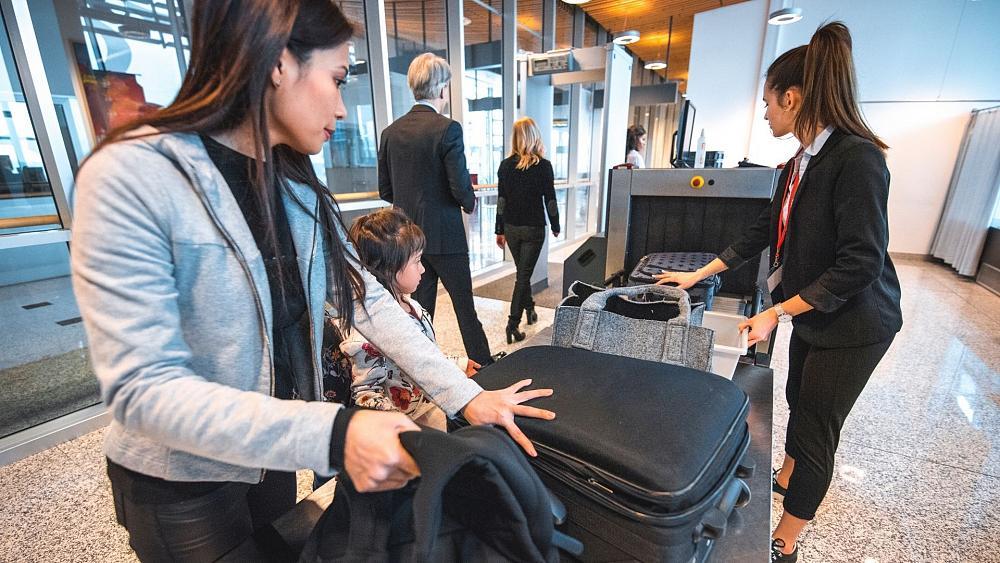
The implementation of high-tech CT (Computed Tomography) scanners at security checkpoints represents one of the most significant shifts in airport logistics I have observed in over 40 years in the international travel business and destination management. This advancement, highlighted by Euronews, addresses one of the primary “friction points” in the global traveler’s journey: the security screening process.
The Professional Perspective on Airport Throughput
From a destination management standpoint, the airport is the “handshake” of a trip. A stressful, congested security experience can negatively color a traveler’s perception of an entire journey before they even reach their destination. The move toward CT scanners is not merely a convenience; it is a critical upgrade to airport “throughput”—the speed and efficiency with which passengers move through a terminal.
These scanners use advanced medical-grade technology to create 3D images of carry-on contents. For the traveler, the primary benefit is the “liquids and laptops stay in the bag” policy. For the professional manager, the benefit is the reduction in human error and the elimination of the physical bottlenecks caused by passengers fumbling with bins and plastic bags.
Logistical Impact on Global Travel
The roll-out of this technology across U.S. and European hubs has several layers of professional impact:
1. Reduced Queue Times: Standard X-ray machines produce 2D images, often requiring security officers to pause the belt or conduct manual bag searches when items overlap. CT technology allows officers to rotate the 3D image on-screen, virtually “unpacking” the bag without touching it. This significantly reduces the secondary search rate.
2. Sustainability of the Passenger Experience: As global travel volume continues to recover and grow, airports cannot simply build more lanes due to physical space constraints. Technology is the only way to scale. These scanners allow for a higher density of passengers per hour within the existing footprint of the checkpoint.
3. Consistency in Security Standards: One of the greatest challenges in international travel is the lack of uniformity. While these scanners are a step toward a “seamless” border, it is important to remember that as an expert, I still advise travelers to check local rules. Technology hasn’t reached every corner of the UK quite yet. As you travel to the must-see sights in England, be prepared for standard security protocols at smaller airports where legacy scanners are still the norm.
The Evolution of the “Seamless Journey”
This technological leap aligns with the broader industry trend toward “biometric” and “frictionless” travel. We are moving toward a future where a passenger’s face is their passport and their bag never leaves their shoulder.
However, even with hi-tech scanners, the “human element” of travel remains. As a professional, I monitor these developments because they change how we advise clients on “buffer times.” If security wait times drop by 50% due to CT technology, it changes the entire schedule of a departure day, allowing for more time in the lounge or a more relaxed transition from the hotel to the gate.
Final Professional Assessment
The Euronews report correctly identifies a turning point in aviation history. The end of the “liquids rule” is a symbol of security catching up to the needs of the modern traveler. By integrating medical imaging technology into the hangar, the aviation industry is finally solving a logistical puzzle that has plagued the travel business for two decades. It is a win for security, a win for efficiency, and most importantly, a win for the passenger experience.
Frequently Asked Questions (FAQ)
1. Does this mean I can bring large bottles of liquids now?
Not necessarily. While the scanners can identify liquids more accurately, many airports still maintain the 100ml (3.4 oz) volume limit during the transition phase. Always verify if your specific departure and arrival airports have fully implemented the new rules before packing full-sized toiletries.
2. Why are these scanners not in every airport yet?
The primary barriers are cost and weight. These CT units are significantly more expensive than traditional X-ray machines and are much heavier, sometimes requiring the floor of the security terminal to be reinforced before installation.
3. Does the 3D scan damage electronic devices or camera film?
The scanners are safe for laptops, tablets, and digital devices. However, like traditional X-rays, high-intensity CT scans can potentially affect high-speed analog camera film (ISO 800 or higher). If you are carrying professional film, I recommend requesting a hand-inspection.
The original story: Will these new hi-tech scanners make airport security less irritating?
125 Free Travel Guides
Explore our collection of free travel guides for Europe, the USA and Latin America, created for travelers who want practical destination insight in one place.
Find more curated travel experiences and book safely with trusted partners on our Travel Hub → AmerExperience Travel Hub
