
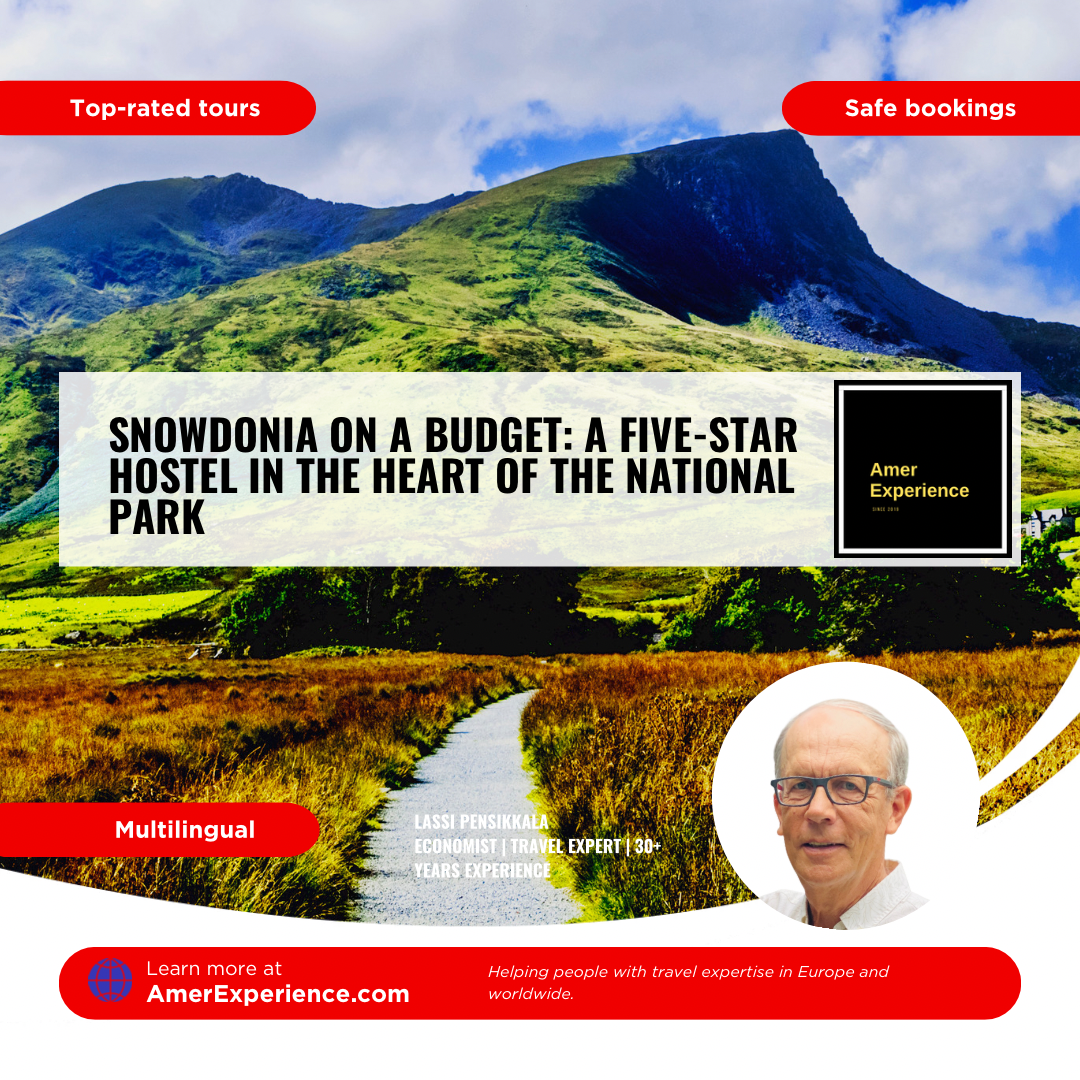
Travel expert review about the article in The Guardian Travel
The article published by The Guardian Travel highlights something increasingly important in modern tourism: travelers are searching for meaningful nature experiences without necessarily spending large amounts of money.
The focus on Snowdonia National Park — today officially also known as Eryri National Park — reflects a broader tourism trend that has grown strongly across the United Kingdom and throughout Europe. More travelers want access to spectacular landscapes, hiking opportunities, clean air, and authentic local environments while still maintaining reasonable travel budgets.
Plan your trip
Tours & activities
Discover top-rated travel experiences worldwide.
Flights & hotels
Compare places to stay and plan your journey.
RecommendedTravel insurance
Prepare for unexpected situations during your trip.
Travel safety
Safety guidance, emergency numbers and useful contacts.

200+ Travel Destination Guides
Explore curated destination guides for the USA, Europe, Latin America and Scandinavia.
Recognized within Google’s AI-powered travel search results.
A growing travel-guide network covering the USA, Europe, Latin America and Scandinavia.
International insights for business travellers, entrepreneurs and decision-makers.
Download the ebooks →Disclosure: As an affiliate, I earn from qualifying purchases made through links on this page at no extra cost to you.
The article works well because it presents nature travel not as luxury tourism, but as an accessible experience available to a much wider audience.
That is one reason why destinations like Snowdonia continue growing in popularity.
For many international travelers, the United Kingdom is often associated mainly with:
- London
- historic towns
- castles
- museums
- and urban culture
However, Britain also possesses extraordinary natural regions that remain surprisingly underrated internationally. Snowdonia is one of the best examples. The area combines dramatic mountains, lakes, coastal scenery, hiking trails, traditional villages, and strong Welsh cultural identity.
What makes the article especially relevant today is the idea of affordable quality travel. Travelers increasingly realize that memorable experiences do not always require expensive luxury hotels or complicated itineraries. In many cases, the strongest travel memories come from landscapes, atmosphere, simplicity, and emotional connection with a destination.
The growing popularity of high-quality hostels and budget-friendly accommodations reflects this change in traveler mentality. Modern travelers, especially those interested in outdoor tourism and slow travel, often prioritize:
- location
- atmosphere
- sustainability
- and authentic experiences
over excessive luxury.
Snowdonia fits perfectly into that trend.
The region offers travelers an opportunity to disconnect from urban stress and reconnect with nature in a relatively accessible way. Hiking through mountain landscapes, spending evenings in traditional pubs, exploring Welsh villages, or simply enjoying silence and changing weather conditions creates a very different experience compared with mass tourism destinations.
From a destination management perspective, this kind of tourism development is extremely positive because it distributes tourism across regional communities rather than concentrating everything in major cities. Local restaurants, guides, accommodations, transport providers, and outdoor businesses all benefit from nature tourism growth.
At the same time, destinations like Snowdonia also show how tourism preferences are evolving internationally. Travelers increasingly seek:
- outdoor experiences
- wellness through nature
- digital detox
- sustainable travel
- and slower rhythms
instead of only fast-paced sightseeing.
As someone who has worked extensively within international tourism and destination management, I find this especially interesting because many travelers today value emotional richness more than material luxury. A sunrise in the mountains, a quiet walking trail, or a scenic train ride often creates far stronger memories than highly commercialized tourism experiences.
The Guardian article captures that atmosphere very well.
Another important aspect is accessibility. Snowdonia offers a type of adventure tourism that remains approachable for different age groups and travel styles. Travelers can enjoy serious hiking routes, but also scenic drives, rail experiences, local gastronomy, and relaxed countryside travel without requiring extreme physical preparation.
This flexibility makes the destination attractive both for younger travelers and for older visitors looking for peaceful active travel experiences.
The popularity of destinations like Snowdonia also reflects the rise of “slow travel,” where travelers spend more time in one region instead of rushing rapidly between multiple destinations. This creates deeper local engagement and usually a more sustainable tourism model.
The United Kingdom overall continues benefiting from this diversification of tourism beyond London. Regions such as Wales, Scotland, Cornwall, the Lake District, and northern England increasingly attract travelers searching for landscapes, local culture, and nature experiences.
Travelers interested in exploring more of Britain beyond the traditional city routes can discover additional inspiration here:
Best things to do in the UK and England
Additional tips to readers
I recommend comparing experiences and excursions through:
Viator tours and activities in the UK and GetYourGuide UK experiences
These platforms help travelers compare prices, evaluate customer reviews, discover hiking excursions, local tours, transportation options, and outdoor activities that may not always be easy to organize independently.
SNOWDONIA BEST THINGS TO DO
BEST UK TOURS
FAQ
Is Snowdonia worth visiting for international travelers?
Yes. Snowdonia offers spectacular landscapes, hiking, Welsh culture, lakes, mountains, and authentic countryside experiences within the United Kingdom.
Is Snowdonia suitable for budget travelers?
Absolutely. The region offers a wide range of affordable accommodations, hostels, hiking routes, and nature-based experiences.
Why is nature tourism growing so strongly in the UK?
Many travelers increasingly seek outdoor experiences, wellness, sustainability, and slower travel connected to nature and local culture.
Warm regards,

Lassi Pensikkala
Destination expert & travel writer
Updated 2026 · © Lassi Pensikkala
This guide is part of my 125 USA, Europe, Latin America and Scandinavia Travel Guides, curated from decades of travel experience. Read and download the guides for free here
Claim Your Free Collection Now
AmerExperience is one of the most comprehensive independent multilingual travel publishing platforms covering destinations across Europe, the Americas, and beyond.
The world is waiting. Get your hands on the most ambitious free travel resource.
Disclosure: As an affiliate, I earn from qualifying purchases made through links in this post at no extra cost to you.
125 Free Travel Guides
Explore our collection of free travel guides for Europe, the USA and Latin America, created for travelers who want practical destination insight in one place.
Find more curated travel experiences and book safely with trusted partners on our Travel Hub → AmerExperience Travel Hub
