
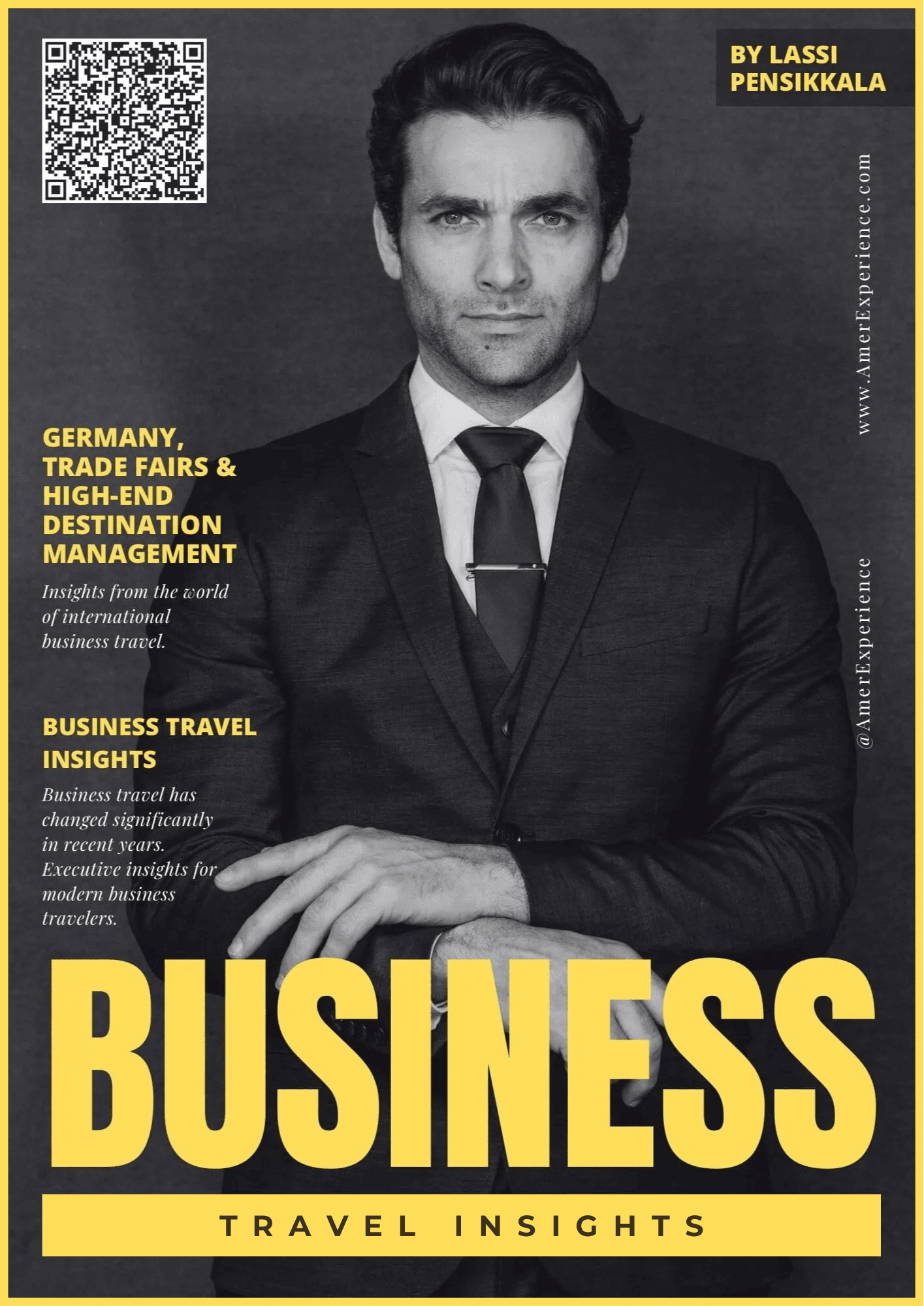
The new era of business travel
Germany business travel – Business travel has changed significantly during recent years. Companies today travel more selectively, meetings are more focused, and decision makers increasingly value quality over quantity.
During my years running my destination management company in Germany, I worked with over 700 B2B clients from 55 countries, including airlines, international travel agencies and global tour operators. My company also achieved recognition in the Finnish Travel Awards as a destination management company.
One of the key success factors was always combining multilingual service with strong local operational understanding. International executives rarely want generic tourism. They want efficiency, reliability, authentic experiences and partners who understand both business realities and destination realities on the ground.
At the same time, international trade fairs, executive networking and face-to-face relationships remain essential in global business culture despite the growth of digital communication.
Germany continues to play a central role in this world. A large share of the world’s leading international trade fairs still take place there, attracting visitors, executives, buyers and exhibitors from every continent. Cities such as Frankfurt, Düsseldorf, Hannover, Munich, Berlin and Hamburg remain major hubs for global business travel.
The reality behind these events is often far more intense than many people imagine. During large trade fairs, hotel prices rise dramatically, availability becomes extremely limited and many visitors are forced to stay far from the exhibition grounds. Calendars quickly fill with meetings, dinners, presentations and networking events that continue from early morning until late evening.
For experienced international business travelers, successful trips are no longer simply about arriving at the destination. They are about maximizing efficiency, reducing unnecessary stress and creating meaningful professional relationships during a very limited time frame.
Modern business travel has also become more strategic. Companies increasingly evaluate carefully why they travel, whom they meet and what long-term value the trip creates. This has shifted attention away from mass business travel toward more targeted, high-level interactions where relationship quality matters more than the number of meetings.
Why Germany remains a business travel powerhouse

Germany’s strength as a business destination is based on several factors. Its central European location, world-class infrastructure, strong industrial sectors and internationally respected trade fairs continue to attract companies from around the world.
For many executives and entrepreneurs, attending major fairs in Germany is not only about sales. It is about visibility, strategic networking, partnerships and understanding where industries are moving globally. The trade fair environment creates opportunities to meet suppliers, customers, investors and competitors all within a few days.
The country also offers exceptional transportation efficiency. High-speed trains, international airports, organized public transportation systems and modern exhibition infrastructure make Germany highly practical for demanding business schedules.
Cities often specialize in certain industries. Frankfurt remains strongly connected to finance and international business services, Düsseldorf to fashion and industrial sectors, Hannover to industrial fairs and manufacturing, Munich to technology and innovation, while Hamburg continues to combine maritime business, logistics and international commerce with elegant Northern European lifestyle.
Germany also offers something many international executives value highly: reliability. Schedules, logistics, transportation systems and business environments generally function with consistency and professionalism, allowing companies to focus more efficiently on business objectives.
This is why business travel remains extremely important despite virtual meetings. Digital communication works well for follow-ups, but major deals, partnerships and trust are still frequently built face-to-face.
Business travelers want more than meetings
One of the biggest changes in modern corporate travel is that travelers increasingly seek balance between intensive business schedules and meaningful local experiences.
After long days at exhibitions or negotiations, many visitors want something completely different from conference halls and meeting rooms. They search for authentic restaurants, local culture, architecture, concerts, sporting events or simply quiet environments where they can disconnect mentally from the pressure of business.
Modern executives increasingly value destinations that allow them to combine productivity with wellbeing. Business travel is becoming less transactional and more experiential.
A carefully selected dinner location, an elegant boutique hotel, a relaxing waterfront atmosphere or a memorable cultural experience can significantly influence how visitors remember both the destination and the business relationship itself.
This is where destination management becomes especially important.
The best business travel experiences are often not created inside the meeting itself, but around the complete atmosphere of the journey. Smooth transportation, cultural understanding, flexibility and attention to detail can transform an exhausting work trip into a highly productive and memorable experience.
Today many executives also extend business trips by one or two days in order to experience the destination more personally. This “bleisure” approach, where business and leisure combine naturally, has become increasingly common among international professionals.

High-end business travelers increasingly prioritize efficiency, personalization and quality experiences. Many executives today prefer fewer but more meaningful meetings combined with premium services and carefully selected activities.
Post-event programs have become increasingly popular. Formula 1 races, concerts, theater performances, Michelin-level dining, cultural visits and rounds of golf at prestigious courses are frequently integrated into executive business trips.
Luxury today is often less about visible extravagance and more about seamless organization, time efficiency and personalized experiences. Business travelers value partners capable of anticipating problems before they appear and adapting quickly to changing schedules.
This shift has increased the importance of creative and flexible destination management services capable of understanding not only logistics but also business psychology, cultural sensitivity and executive expectations.
The ability to create the right atmosphere around important meetings has become a competitive advantage itself. In many situations, successful business relationships are influenced not only by presentations or negotiations, but also by the overall emotional experience surrounding the trip.
Premium destination management also increasingly involves discretion and privacy. High-level executives often appreciate environments where they can relax, think clearly and communicate without unnecessary pressure or distractions.
Golf, networking & executive relationships
Golf continues to play an important role in international business culture. Some of the most valuable discussions often happen outside formal meeting rooms, where executives interact in more relaxed and personal surroundings.
A golf course creates a completely different communication environment. Conversations become more natural, relationships develop gradually and business partners often reveal more about their personality, mindset and long-term thinking.
This explains why many executives still integrate golf into business travel programs around the world.
Germany itself offers numerous high-quality golf destinations near major business hubs, allowing executives to combine meetings with premium leisure experiences. Similar patterns can also be seen internationally in destinations where business and lifestyle experiences increasingly merge together.
Networking today is no longer only about formal presentations or conference rooms. It is also about creating trust, shared experiences and personal connection.
In reality, many long-term international business relationships are strengthened during dinners, walks through the city, cultural visits or rounds of golf rather than during official negotiations themselves.
Local expertise still matters – Germany business travel insights

One of the most underestimated aspects of business travel is local operational knowledge. Even with modern booking platforms and AI tools, international visitors still frequently need reliable local expertise and real-time support during demanding travel schedules.
Unexpected schedule changes, transportation issues, cultural misunderstandings or last-minute logistical adjustments can quickly become highly stressful during major international events.
Multilingual communication, understanding local business culture, solving problems quickly and maintaining smooth coordination remain critical factors for successful corporate travel experiences.
Technology helps enormously today, but local human expertise still matters. Real-time problem solving, cultural sensitivity and flexibility cannot always be automated.
Experienced local partners often understand subtle details that international visitors may never notice themselves. These details can influence schedules, communication quality and even the overall success of important meetings.
Business travel and the future of global networking
The future of business travel will likely become more selective but also more experience-oriented. Companies increasingly evaluate the value of every trip carefully, yet human relationships remain fundamental in international business.
Trade fairs, conferences and executive meetings continue creating opportunities that virtual communication alone cannot fully replace. At the same time, business travelers increasingly expect journeys that combine productivity, comfort, personalization and meaningful local experiences.
Artificial intelligence, digital booking tools and remote communication will continue transforming the industry, but they are unlikely to replace the emotional and psychological dimensions of face-to-face interaction.
International business still depends heavily on trust. Trust develops faster when people meet personally, observe communication styles, share experiences and build mutual understanding beyond screens and emails.
The future business traveler will likely expect more personalization than ever before. Flexible itineraries, efficient logistics, health-conscious environments, sustainability and carefully curated experiences are becoming increasingly important.
This evolution creates opportunities for a new generation of destination management services focused not only on transportation and hotels, but also on understanding the complete psychology and expectations of modern business travelers.
Business travel remains deeply human
After decades observing international business travel closely, one reality remains clear: business is still fundamentally about people, trust and relationships.
Technology changes continuously, but successful business travel still depends on human understanding, cultural awareness, local expertise and the ability to create experiences that make international visitors feel comfortable, respected and inspired.
Germany’s trade fairs and business culture continue to demonstrate why face-to-face interaction remains so valuable. Behind every exhibition hall, executive dinner, golf round or late-night negotiation there are people building long-term professional relationships that often shape future international business opportunities for years to come.
In many ways, the future of business travel may actually become even more human. As digital communication becomes increasingly common, authentic personal interaction, trust and meaningful experiences become even more valuable than before.
The most successful business trips are often remembered not because of presentation slides or meeting agendas, but because of the people met, conversations shared and moments where genuine trust was created across cultures and industries.
FAQ
Why is Germany important for international business travel?
Germany remains one of the most important business travel destinations in Europe because of its central location, strong industrial base, advanced infrastructure and internationally recognized trade fairs. Cities such as Frankfurt, Düsseldorf, Hannover, Munich, Berlin and Hamburg attract executives, buyers, exhibitors and entrepreneurs from around the world.
Why do trade fairs still matter in the digital era?
Trade fairs remain important because they create direct face-to-face opportunities for trust-building, networking, product presentations and strategic partnerships. Digital meetings are useful for communication and follow-up, but personal meetings often remain essential for serious international business relationships.
What is high-end destination management in business travel?
High-end destination management combines logistics, local expertise, cultural understanding and premium experiences. It helps business travelers save time, reduce stress and create meaningful moments around meetings, trade fairs and executive networking.
Practical tools for business travelers

Modern business travel requires flexibility and fast decision-making. Delayed meetings, extended trade fair schedules and last-minute networking opportunities often create the need for additional hotel nights, local experiences or further arrangements during the trip itself.
For this reason, many experienced business travelers today increasingly use flexible online platforms to organize activities, transportation and premium experiences directly on the spot. Services such as Viator ↗ and GetYourGuide ↗ help travelers compare local experiences, business-friendly tours, executive activities, cultural events and premium leisure programs in different destinations worldwide.
For flights and hotels, flexibility, location and cancellation conditions have become increasingly important in modern business travel planning. Especially during major international trade fairs in Germany and other global business hubs, hotel demand can become extremely challenging. Many experienced travelers reserve accommodation early and often combine central business hotels with additional local transportation planning to optimize time efficiency during busy schedules.
Business travelers also increasingly combine meetings with cultural experiences, gastronomy, sporting events and premium leisure activities that help balance intense workdays with more relaxed local experiences.
For additional destination inspiration, travelers can also explore our
USA top 60 travel destinations ↗
covering cities, culture, gastronomy, outdoor experiences and premium travel ideas across multiple regions.

Lassi Pensikkala is an economist, international business consultant and entrepreneur with decades of experience in destination management, international business travel, trade fairs and cross-cultural business operations.
He founded and managed a successful destination management company in Germany serving more than 700 B2B clients from 55 countries, including airlines, international travel agencies and global tour operators. His company received recognition in the Finnish Travel Awards for destination management services.
Through his multilingual background and long international experience, he has worked extensively with executive travel programs, international trade fairs, premium destination experiences and business networking environments across Europe and beyond.
Business Travel Insights Magazine
This article is part of the AmerExperience Business Travel Insights Magazine ↗ — executive perspectives on international business travel, trade fairs, destination management, global business culture, premium hotels and meaningful travel experiences.
Related Business Travel Insights
AmerExperience Business
Explore international business consulting, executive insights, cross-cultural business, entrepreneurship, management, marketing and practical resources from the AmerExperience Business hub.
125 Free Travel Guides
Explore our collection of free travel guides for Europe, the USA and Latin America, created for travelers who want practical destination insight in one place.
Find more curated travel experiences and book safely with trusted partners on our Travel Hub → AmerExperience Travel Hub
