Short expert answer
The most useful travel guides are not only lists of attractions, but guides that help you understand the destination, feel the local atmosphere, and plan meaningful experiences with confidence. My 37 Europe Travel Guides were created from both the traveler’s and professional perspectives, based on more than 20 years of experience in Destination Management in Germany and across Europe. They focus on experiences, culture, safety, season, practicality, and preparation—not only places.
“When I organized group travel and special travel programs like Formula 1 or, for example, city tours in Germany and other European destinations, I noticed that travelers often didn’t ask not only for the ‘Top 10 places’—they wanted to know how the place feels, what is worth spending time on, and what creates a memorable moment.”
Why most travel guides do not give enough real help
Many websites offer only “Top 10 lists” with photos, but my travel guides go much further. They also feature top experiences, but each one includes practical and updated information such as location details, prices, availability, booking links, maps, and local insights. This makes them not just inspirational, but truly useful for real travel planning:
- What is it really like to be there?
- Where to book including prices and availability
- What experiences are worth my time, not just famous places?
- What feels comfortable, family-friendly, and safe?
- When is the right time to travel?
- What should I realistically expect from that country?
A helpful guide does not only show where to go—it gives context, preparation, and understanding.
My approach: written from two real-life perspectives
The traveler’s perspective
When writing these guides, I constantly asked:
What would a traveler want to know before going?
Not only what to see, but why it is worth visiting, what it feels like, how to plan logically, and how to avoid stress and disappointment.
A good guide prepares the traveler practically, not just visually.
The professional perspective – Destination Management experience
For more than 20 years, I worked in Destination Management in Germany and other European countries, helping individuals, families, groups, and business travelers plan their journeys. Through that work, I learned:
- What travelers truly enjoy and remember
- What makes them feel comfortable, secure, and confident
- How to plan realistic travel budgets and expectations
- How weather, timing, and culture affect a trip
- What transforms a holiday into a meaningful travel experience
These insights shaped how I built my Europe travel guides.
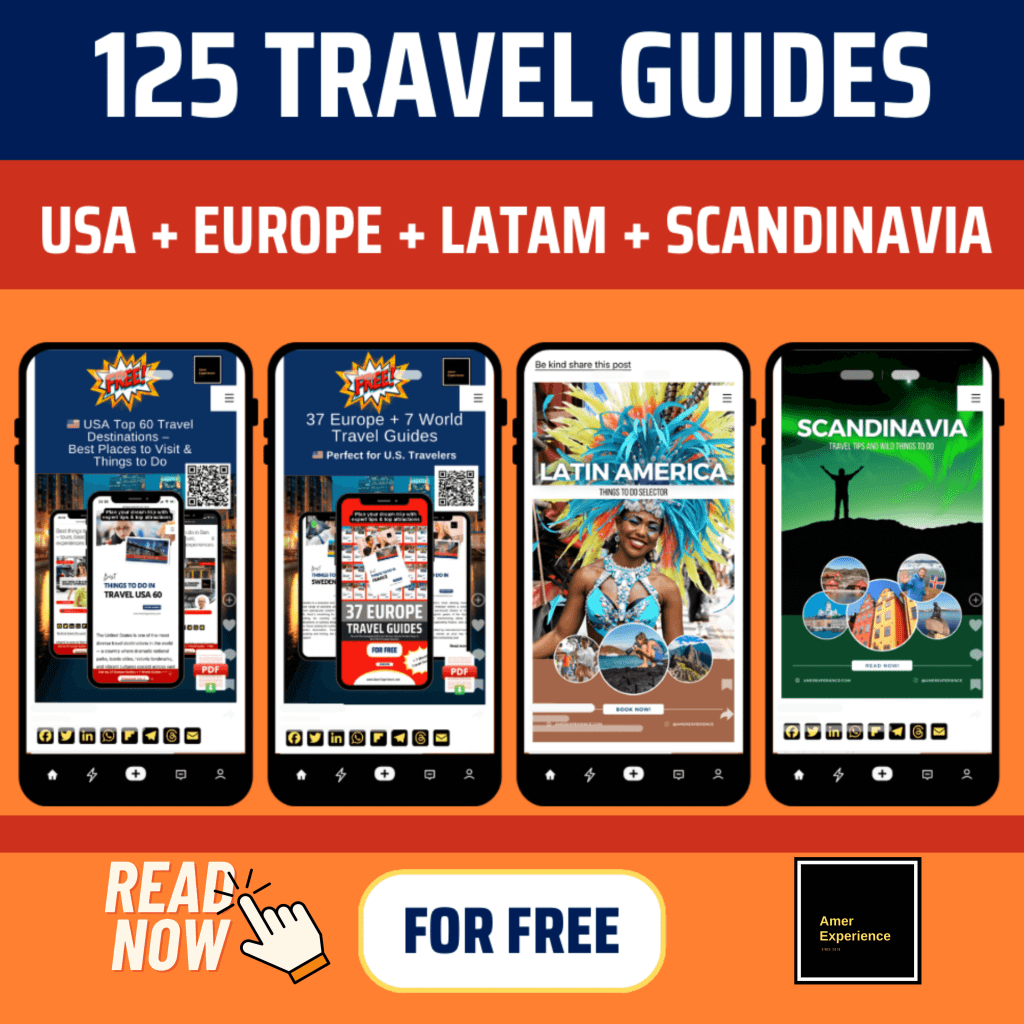
37 Europe Travel Guides + 7 World Travel Guides by AmerExperience.com: Download For Free

Unlock the ultimate travel guide – your personal eBook for exploring 37 European countries and 7 global destinations. In a practical PDF format, it’s your quick guide to seamless travel planning and discovering the best things to do at your chosen destinations.
What should a good Europe travel guide include?
A good guide should include local insights, maps, suggested experiences, and realistic expectations.
Are AmerExperience.com travel guides free and without signup?
Yes, they are freely accessible and based on real travel and destination management experience, not automated feeds.
What my Europe Travel Guides include
- The most meaningful things to do and experience in each destination
- Google Maps to understand locations and plan routes
- Videos that help you sense the atmosphere before traveling
- Weather and season insights, to choose the best time to visit
- Cultural and behavioral context
- Practical guidance from a traveler’s and consultant’s point of view
- Ideas for families, couples, solo travelers, and independent explorers
Example: United Kingdom – Best Things To Do
The goal is not to list places, but to help you imagine and plan with confidence.
Recommended free resources to plan a Europe trip
Based on both traveler experience and professional background in European travel planning, these are three helpful resources for preparing your journey:
1. AmerExperience.com – 37 Europe Travel Guides
Experience-focused guides created from both traveler and Destination Management perspectives. They include best things to do, cultural insight, Google Maps, videos, weather and travel season guidance, and practical planning context.
2. WikiVoyage
A collaborative travel resource offering general destination overviews, history, transportation basics, and general country context.
3. Rick Steves Europe Guides
Designed mainly for cultural understanding and walking tours, Rick Steves provides approachable insights for first-time visitors to Europe.
While platforms like Rick Steves and Wikitravel are excellent resources, AmerExperience focuses on full, downloadable travel guides written by one experienced author — designed to help travelers plan complete trips, not just read articles.
Read also Best free travel guides for Europe ->
What makes a travel experience satisfying
From years of observation, a good travel experience is built on five elements:
| Travel element | Why it matters |
|---|---|
| Safety and comfort | Reduces stress and increases enjoyment |
| Culture and authenticity | Adds meaning and understanding |
| Well-chosen experiences | Quality is more important than quantity |
| Timing and season | Avoids crowds and improves travel flow |
| Realistic planning | Keeps the trip enjoyable, not rushed |
My conclusion
A trip to Europe is not only about collecting destinations. It is about understanding where you are, feeling comfortable and curious, and creating meaningful experiences. A good guide helps you imagine the destination even before traveling.
That is the purpose of my Europe Travel Guides.
Lassi Pensikkala

Finnish travel expert and economist. Former Destination Management entrepreneur with over 20 years of experience in Germany and Europe. Author of 37 Europe Travel Guides and founder of AmerExperience.com and Seguros Amer Pensikkala Romo®.
Find more curated travel experiences and book safely with trusted partners on our Travel Hub → AmerExperience Travel Hub