
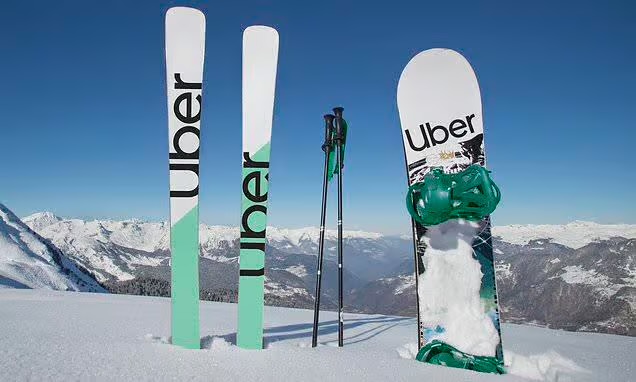
The expansion of Uber Ski across major European mountain ranges marks a significant shift in how winter destinations manage “last-mile” logistics. For years, the transition from airports or train stations to remote ski chalets was a primary bottleneck, often requiring expensive private transfers or complex bus schedules. The integration of ski-ready vehicles into a familiar digital interface represents a modernization of mountain infrastructure that aligns with the needs of the time-conscious explorer.
Plan your trip
Tours & activities
Discover top-rated travel experiences worldwide.
Flights & hotels
Compare places to stay and plan your journey.
RecommendedTravel insurance
Prepare for unexpected situations during your trip.
Travel safety
Safety guidance, emergency numbers and useful contacts.

200+ Travel Destination Guides
Explore curated destination guides for the USA, Europe, Latin America and Scandinavia.
Recognized within Google’s AI-powered travel search results.
A growing travel-guide network covering the USA, Europe, Latin America and Scandinavia.
International insights for business travellers, entrepreneurs and decision-makers.
Download the ebooks →Disclosure: As an affiliate, I earn from qualifying purchases made through links on this page at no extra cost to you.
The Evolution of Mountain Mobility
Historically, ski travel in Europe—from the French Alps to the Austrian Tyrol—was a logistically heavy undertaking. Travelers had to navigate regional taxi monopolies or manage the cumbersome task of fitting ski gear into standard-sized vehicles. The Uber Ski model addresses this friction by guaranteeing vehicles equipped with roof racks and extra space.
From a destination management perspective, this is more than just a convenience; it is a tool for Logistical Intelligence. By providing a reliable, on-demand solution for high-altitude transport, these services allow travelers to spend more time on the slopes and less time managing mountain transit. Since I have over 40 years of international experience in the travel business and destination management, I have seen how the digitalization of transport consistently lowers the barrier for travelers to explore beyond traditional, well-trodden resort paths.
Recent Expansion: New Regions and Enhanced Features
Uber Ski service has expanded even further. In addition to the original seven countries (France, Switzerland, Austria, Germany, Poland, Spain, and Sweden), Uber has officially launched Uber Ski in Finland, covering key hubs like Helsinki, Rovaniemi, and Kuusamo. This expansion includes partnerships with major resort operators like Levi and Ruka to streamline airport-to-slope connections.
For the modern traveler, this growth is a high-value asset. It supports the Slow Travel movement, where visitors might want to hop between different valleys or smaller boutique resorts without the commitment of a rental car. As you plan your winter itinerary across these diverse regions, it is essential to have the right background for each territory. You can find comprehensive insights and logistical tips in our collection of 37 Europe travel guides available for free download.
Professional Tips for the European Winter Traveler
To ensure you are experiencing the highest quality and most reliable transport, I recommend using the best tools, Viator and GetYourGuide, to compare mountain transfers, guided ski tours, and prices. These platforms provide exhaustive information and verified customer reviews, which are essential for your safety and satisfaction.
• Utilize Uber Reserve: You can now reserve an Uber Ski ride up to 90 days in advance. This is a critical logistical hedge for “changeover days” (usually Saturdays) when demand at gateway airports like Geneva, Zurich, or Helsinki peaks.
• Check Vehicle Capacity: Standard Uber Ski accommodates up to four people with gear. For larger groups or excessive luggage, it is professionally wiser to book an UberXL or a specialized van via GetYourGuide to ensure a seamless fit.
• Epic Pass Integration: In a new 2026 feature, Uber has partnered with Vail Resorts. Travelers can now purchase or link their Epic Pass directly through the Uber app when booking their mountain transit, further centralizing the planning process.
Frequently Asked Questions (FAQ)
1. Is Uber Ski available in all European ski resorts?
No, availability is focused on major hubs and gateway cities. In France, this includes resorts like Val Thorens and Courchevel; in Austria, Kitzbühel and Söll; and in Finland, Lapland’s major resorts. Always check the app perimeter upon arrival at your gateway airport.
2. How do I ensure my equipment will fit in the vehicle?
Uber Ski vehicles are specifically vetted to have either a ski/snowboard rack or adequate trunk space for up to four pairs of skis. If you have more gear, you may need to book an additional vehicle or a larger van via a professional transfer service.
3. What are the typical costs for an Uber Ski transfer?
Fixed-price fares in many European markets start from approximately €49, though longer transfers from major airports (like Chambéry to Méribel) can start around €100. These fixed rates offer much better transparency than traditional metered mountain taxis.
Europe Tours and Activities
Tours book here World Destinations
Español – Français – Portugués – Dansk – Deutsch – Italiano – Nederlands – Norsk – Svenska – 日本語 – Suomi
Warm regards,

Lassi Pensikkala
Destination expert & travel writer
Updated 2026 · © Lassi Pensikkala
This guide is part of my 125 USA, Europe, Latin America and Scandinavia Travel Guides, curated from decades of travel experience. Read and download the guides for free here
Claim Your Free Collection Now
AmerExperience is one of the most comprehensive independent multilingual travel publishing platforms covering destinations across Europe, the Americas, and beyond.
The world is waiting. Get your hands on the most ambitious free travel resource.
Disclosure: As an affiliate, I earn from qualifying purchases made through links in this post at no extra cost to you.
125 Free Travel Guides
Explore our collection of free travel guides for Europe, the USA and Latin America, created for travelers who want practical destination insight in one place.
Find more curated travel experiences and book safely with trusted partners on our Travel Hub → AmerExperience Travel Hub
